
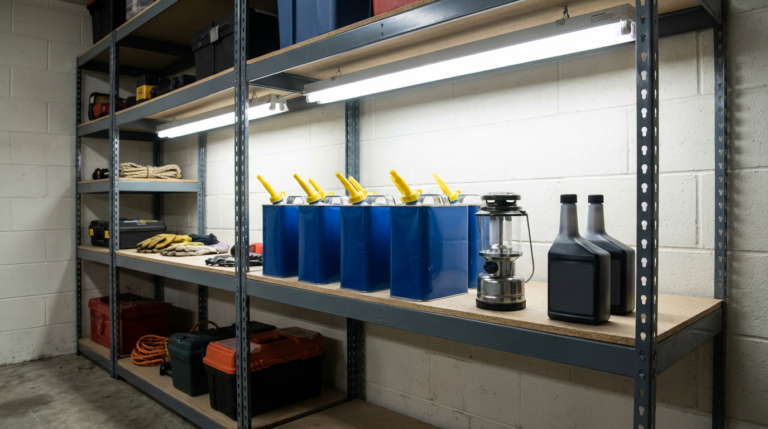
Kerosene is one of the most versatile emergency fuels — it powers heaters, lanterns, and certain cook stoves, and it’s readily available at gas stations and hardware stores. But storing it improperly leads to degradation, safety hazards, and fuel that won’t burn cleanly when you need it most. Here’s what you need to know about kerosene storage life, proper containers, and how to tell if your stored kerosene is still good.
How Long Does Kerosene Last?
Kerosene shelf life depends heavily on how it’s stored:
- Sealed, original container, cool and dark: 2-5 years without significant degradation
- Proper fuel container, stabilizer added: 5-10 years
- Open or poorly sealed container: 6-12 months before noticeable degradation
- Exposed to heat and sunlight: 3-6 months before problems develop
Unlike gasoline, which degrades rapidly (3-6 months without stabilizer), kerosene is a more stable fuel. It doesn’t evaporate as quickly, doesn’t develop gum deposits as fast, and maintains its combustion properties longer. That said, it’s not indefinite — kerosene does degrade, and old kerosene burns poorly and produces more soot and odor.
What Causes Kerosene to Go Bad
Three things degrade stored kerosene:
- Water contamination: Water enters through condensation inside partially filled containers, especially with temperature fluctuations. Water in kerosene causes bacterial and fungal growth (yes, microbes can grow in fuel), creates a layer of sludge at the bottom of the container, and causes wicks to sputter and burn unevenly. This is the #1 reason stored kerosene goes bad.
- Oxidation: Contact with air causes slow chemical changes that darken the kerosene and increase soot production when burned. Properly sealed containers minimize oxidation.
- UV light and heat: Sunlight and high temperatures accelerate chemical breakdown. Kerosene stored in a hot garage degrades 3-4x faster than kerosene stored in a cool basement.
How to Store Kerosene Properly
Container Selection
Use only approved fuel containers. The standard is a blue-colored kerosene container (red is gasoline, yellow is diesel — color coding exists for safety). Never store kerosene in:
- Old milk jugs or water bottles (plastic degrades and leaches into the fuel)
- Glass containers (breakage risk, no venting)
- Metal containers that aren’t lined or designed for fuel (rust contaminates the kerosene)
For long-term storage, metal jerry cans with sealed caps are superior to plastic — they block UV light completely and seal more tightly. If using plastic containers, choose HDPE (high-density polyethylene) fuel-rated containers and store them away from direct sunlight.
Storage Location
- Store in a cool (50-70°F), dry, well-ventilated area
- Keep away from direct sunlight and heat sources
- Store away from the house if possible — a detached garage, shed, or outdoor storage cabinet is ideal
- Never store kerosene indoors near living spaces, water heaters, or furnaces
- Keep containers off concrete floors (use a shelf or wooden pallet) to minimize temperature swings and condensation
Fill Containers Completely
This is the most overlooked storage tip. A half-full container has a large air space that promotes condensation and oxidation. Fill containers to 95% capacity (leave a small expansion space) to minimize the air-to-fuel ratio. If you’re drawing kerosene from a larger container, decant into smaller full containers rather than leaving the big one half-empty.
Use Fuel Stabilizer
Fuel stabilizers (PRI-D or STA-BIL Diesel formula both work for kerosene) extend storage life by 2-3x. Add stabilizer when you first fill the container, not after the kerosene has already degraded. Shake the container to mix after adding stabilizer.
How to Tell if Stored Kerosene Is Still Good
- Color: Fresh kerosene is clear to very pale yellow. Darkened or amber kerosene has oxidized — it’ll still burn but produces more soot and smell.
- Clarity: Hold a clear glass of the kerosene up to light. Good kerosene is transparent. Cloudy kerosene contains water. Visible particles or sludge mean contamination.
- Smell: Fresh kerosene has a mild petroleum smell. Degraded kerosene smells sour, musty, or notably stronger than fresh.
- Burn test: Soak a cotton ball in the kerosene and light it in a safe outdoor location. Clean-burning kerosene produces a steady flame with minimal smoke. Bad kerosene sputters, smokes excessively, or has difficulty maintaining a flame.
How Much to Store
Storage quantities depend on your intended use:
- Kerosene heater: 1-2 gallons per day of continuous use. A 14-day supply = 14-28 gallons.
- Kerosene lantern: About 1/4 gallon per 8-hour burn session. A month of nightly use = 1-2 gallons.
- Cook stove: Varies by model, but roughly 1/2 gallon per day of cooking. A month = 15 gallons.
For most preppers, 15-30 gallons covers 2-4 weeks of heating and lighting. Store in multiple 5-gallon containers rather than one large drum — smaller containers are easier to handle, seal better, and if one gets contaminated, you don’t lose your entire supply.
Safety Reminders
Kerosene is flammable. Always store away from ignition sources. Never refuel a hot kerosene heater or lantern — let it cool first. Use kerosene heaters only in well-ventilated spaces (carbon monoxide risk). Keep a fire extinguisher accessible wherever kerosene is stored and used. And never substitute gasoline for kerosene — gasoline in a kerosene heater is an explosion and fire risk.
Bottom Line
Kerosene stored properly — in sealed, full containers, in a cool dark location, with fuel stabilizer — lasts 5-10 years. Without those precautions, expect 1-2 years before degradation becomes a problem. Check your stored kerosene annually for color, clarity, and smell. Replace or rotate any supply that shows signs of water contamination or oxidation. For more on emergency energy options, see our guides on DIY renewable energy and solar vs gas generators.

Dan Lockland is a preparedness instructor and survival skills educator with over 15 years of hands-on experience. He shares practical, no-nonsense guidance on emergency preparedness, self-reliance, and sustainable living at PreparingWithDan.com.