
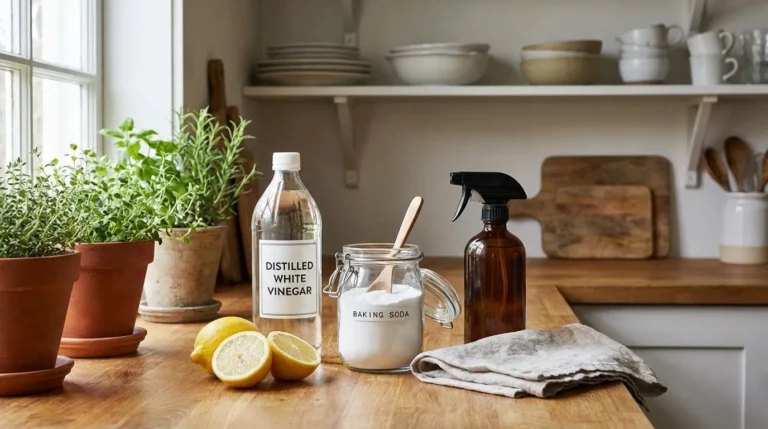
When commercial cleaning products aren’t available — whether because of a supply chain disruption, a tight budget, or a long-term off-grid situation — you can clean and disinfect your home effectively with ingredients you probably already stock in your prepper pantry: vinegar, baking soda, salt, lemon juice, and hydrogen peroxide. These aren’t just “green alternatives” — they’re proven cleaning agents that humans used for centuries before commercial products existed.
The Five Core Ingredients
White Vinegar (5% Acetic Acid)
Vinegar is a mild acid that dissolves mineral deposits, cuts grease, and inhibits the growth of many bacteria and mold species. It’s your primary all-purpose cleaner. Use it full-strength on tough jobs (mineral buildup on faucets, mold on bathroom tiles) or diluted 1:1 with water for general surface cleaning. Vinegar is effective against E. coli, Salmonella, and many common household bacteria, though it’s not a hospital-grade disinfectant.
Do not use on: Natural stone (marble, granite — the acid etches the surface), hardwood floors with a wax finish, or cast iron. And never mix vinegar with bleach — the combination produces toxic chlorine gas.
Prepper note: White vinegar stores indefinitely in a sealed container. Buy gallon jugs and store them in your pantry. It’s useful for cleaning, cooking, food preservation (pickling), and as a mild antiseptic for wound cleaning in emergencies.
Baking Soda (Sodium Bicarbonate)
Baking soda is a mild alkali abrasive that neutralizes odors, lifts stains, and provides gentle scrubbing power without scratching surfaces. It works by chemically reacting with acidic grime (grease, food residue) to break the bond with the surface. Sprinkle it directly on surfaces and scrub with a damp cloth, or make a paste with water for tougher jobs.
Best uses: scrubbing sinks, tubs, and ovens; deodorizing refrigerators, trash cans, and carpets; removing burnt-on food from pots and pans; freshening laundry (add 1/2 cup to the wash cycle).
Prepper note: Baking soda stores for 2+ years in a sealed container. It’s also useful for baking (obviously), as a fire extinguisher for small grease fires, as an antacid for heartburn, and for neutralizing battery acid. A $5 bag from Costco provides months of cleaning supply.
Lemon Juice
Lemon juice contains citric acid (about 5-6% concentration), which dissolves mineral deposits, bleaches stains naturally, and leaves a fresh scent. It’s particularly effective on hard water stains, copper and brass tarnish, and light discoloration on cutting boards and countertops. Fresh lemon juice works best, but bottled concentrate stores longer and works nearly as well.
Best uses: removing hard water buildup in kettles and coffee makers (fill with water + juice of 2 lemons, boil, let sit 1 hour); bleaching stained cutting boards (rub with lemon half and salt, let sit 30 minutes); polishing copper (lemon juice + salt paste).
Hydrogen Peroxide (3% Solution)
Hydrogen peroxide is the strongest natural disinfectant on this list. A 3% solution (the standard drugstore concentration) kills bacteria, viruses, and mold spores on contact. Use it as a spray-on disinfectant for countertops, cutting boards, bathroom surfaces, and any area where sanitization matters (food prep areas, sickroom surfaces during illness).
Spray it on, let it sit for 5-10 minutes, then wipe clean. No rinsing needed — hydrogen peroxide breaks down into water and oxygen. It also whitens grout, removes blood stains from fabric, and deodorizes surfaces.
Storage note: Hydrogen peroxide degrades when exposed to light. Store in the original brown bottle in a dark location. Sealed bottles last 1-3 years; once opened, use within 6 months for reliable disinfection strength. Test old peroxide: pour a small amount on a cut potato. If it fizzes, it’s still active.
Salt
Plain table salt or kosher salt is a mild abrasive and desiccant. It scrubs pots, pans, and cast iron without damaging the surface. Combined with lemon juice or vinegar, it boosts their cleaning power. Salt also absorbs moisture and fresh spills — sprinkle it immediately on a wine or grease spill to prevent staining.
Best uses: cleaning cast iron (scrub with salt and a damp cloth — no soap needed); scouring cutting boards; absorbing grease spills on fabric; melting ice on walkways in winter. Salt stores indefinitely — it’s a mineral, not a perishable product.
Recipes for Common Cleaning Tasks
All-Purpose Surface Cleaner
Mix equal parts white vinegar and water in a spray bottle. Add 10-15 drops of essential oil (tea tree, lavender, or lemon) if you want fragrance and mild additional antibacterial properties. Shake before each use. Works on countertops, appliances, glass, mirrors, and most hard surfaces. Cost: about $0.10 per bottle.
Heavy-Duty Scrub (Sinks, Tubs, Ovens)
Make a paste of 1/2 cup baking soda + enough water to form a thick paste. Apply to the surface, let sit 15-30 minutes, then scrub with a brush or rough cloth. For extra power on baked-on grease, spray vinegar over the baking soda paste — the fizzing reaction helps lift stubborn grime. Rinse with water.
Disinfectant Spray (Food Prep Areas, Sickroom)
Fill a spray bottle with 3% hydrogen peroxide (straight from the drugstore bottle — don’t dilute). Spray surfaces, let sit 5-10 minutes, wipe clean. For maximum disinfection, spray with vinegar first, let dry, then spray with hydrogen peroxide. Studies have shown this one-two punch kills more bacteria than either agent alone, including E. coli and Salmonella.
Important: Don’t mix vinegar and hydrogen peroxide in the same bottle — the combination creates peracetic acid, which is corrosive in concentrated form. Apply them sequentially from separate bottles.
Glass and Mirror Cleaner
Mix 2 cups water + 1/2 cup white vinegar + 1/4 cup rubbing alcohol (if available). Spray and wipe with newspaper or a lint-free cloth. The alcohol speeds evaporation and prevents streaking. Without alcohol, straight vinegar-water works — just buff dry immediately to avoid streaks.
Drain Cleaner
Pour 1/2 cup baking soda down the drain, followed by 1/2 cup vinegar. Cover the drain and let it fizz for 30 minutes. Flush with boiling water. This clears minor clogs and deodorizes. For tougher clogs, repeat or follow with a manual drain snake. This won’t dissolve a hair clog the way commercial drain cleaner does, but it handles grease and soap buildup effectively.
Why This Matters for Preppers
In any extended emergency, sanitation becomes critical. Poor hygiene leads to illness, and illness in a situation without easy medical access can become life-threatening. Having the knowledge and supplies to keep your living space clean and disinfected — without commercial products — is a practical survival skill.
The five ingredients listed here are cheap, store for years, and serve multiple purposes beyond cleaning. Vinegar, baking soda, salt, and hydrogen peroxide should already be in your emergency supply for cooking, first aid, and food preservation. Using them for cleaning means fewer specialty products to store and less waste of limited pantry space.
For more on maintaining hygiene during emergencies, see our guide on sanitation and trash management in urban emergencies and our complete emergency survival checklist.

Dan Lockland is a preparedness instructor and survival skills educator with over 15 years of hands-on experience. He shares practical, no-nonsense guidance on emergency preparedness, self-reliance, and sustainable living at PreparingWithDan.com.