
A portable power station is bought for one appliance, and the arithmetic is on two labels. Divide the kWh per year on your refrigerator’s yellow EnergyGuide label by 8.76 to get its average watts: a fridge rated 400 kWh a year averages about 46 W and runs roughly 19 hours on a 1,024 Wh station, one rated 700 kWh averages 80 W and gets about 11. A CPAP at 30-60 W gets two to four nights; a phone charges from it forty to fifty times. Nothing on this page powers an apartment. Ready.gov’s power-outage guidance is to plan alternative power for the things you truly need — medical devices, refrigerated medicine, a phone — and that list, not the wattage on the box, is what to size against.
Six stations below, from a 192 Wh unit that lives in a drawer to a 5 kWh unit that needs a hallway, compared on what the listing states — capacity, continuous output, chemistry — and on the appliance each can honestly carry. No scores, no prices. All are battery units, safe indoors; the fuel generator is a different product with different rules, covered in our solar vs gas generator guide.
Three numbers, one chemistry
- Watt-hours (Wh) is the tank: how much energy is stored. Divide by the appliance’s average watts to get hours. Real figures run 10-15% below the label because the inverter takes its share.
- Continuous watts is the tap: the biggest load it can run. A microwave or a kettle needs 1,000-1,800 W; a fridge needs a few hundred but surges on start-up; a CPAP or a router needs tens.
- Recharge input decides whether a solar panel can refill it in a day. Check the maximum solar input before buying the panel; our folding panel review explains why the panel is the second purchase.
- LiFePO4 (lithium iron phosphate) is the chemistry to want for a unit that sits charged for months: thousands of cycles and more tolerant of storage than older lithium-ion. Five of the six below state it.
What a kilowatt-hour actually runs
| Load | Typical draw | Hours from 1,024 Wh (after inverter loss) |
|---|---|---|
| Phone charging | 10-20 W while charging | 40-50 full charges |
| CPAP without humidifier | 30-60 W | 15-30 h (several nights) |
| Router and modem | 10-20 W | 2 days |
| Refrigerator (label 350-700 kWh/year) | 40-80 W average (kWh/year ÷ 8.76) | 11-22 h |
| Space heater, kettle, microwave | 1,000-1,800 W | Under an hour |
Draw figures are typical ranges; read the label on your own appliance. For a fridge, the EnergyGuide number already averages the compressor cycling on and off, so it is the honest figure to divide by; the type matters too, since top-freezer models generally use less than side-by-side ones of the same size. The lesson is the last row: resistive heat and cooking are the loads that empty a battery, and a gas stove or a safe heater does those jobs for a fraction of the money.
At a glance
| Product | Best for | Capacity / output (listing) |
|---|---|---|
| Daran 300 W, 192 Wh LiFePO4 | A drawer unit for phones, a lamp and a router | 192 Wh / 300 W |
| Marbero 300 W, 237 Wh | Most of one CPAP night, or a car kit | 237 Wh / 300 W |
| EcoFlow DELTA 3, 1,024 Wh | The apartment unit: a fridge for 11-22 hours or a CPAP for 2-4 nights | 1,024 Wh / 1,800 W |
| Jackery Explorer 1000 v2, 1,070 Wh | The same job from the other big name | 1,070 Wh / 1,500 W |
| EcoFlow DELTA 3 Max, 2,048 Wh | One to two days of fridge, or fridge plus router plus phones | 2,048 Wh / 2,400 W |
| Jackery Solar Generator 5000 Plus, 5,040 Wh | A house with a transfer switch and a garage | 5,040 Wh / 7,200 W |
Phone-and-lights class: under 300 Wh
Charges phones, runs a router and a lamp overnight. Fits in a drawer.
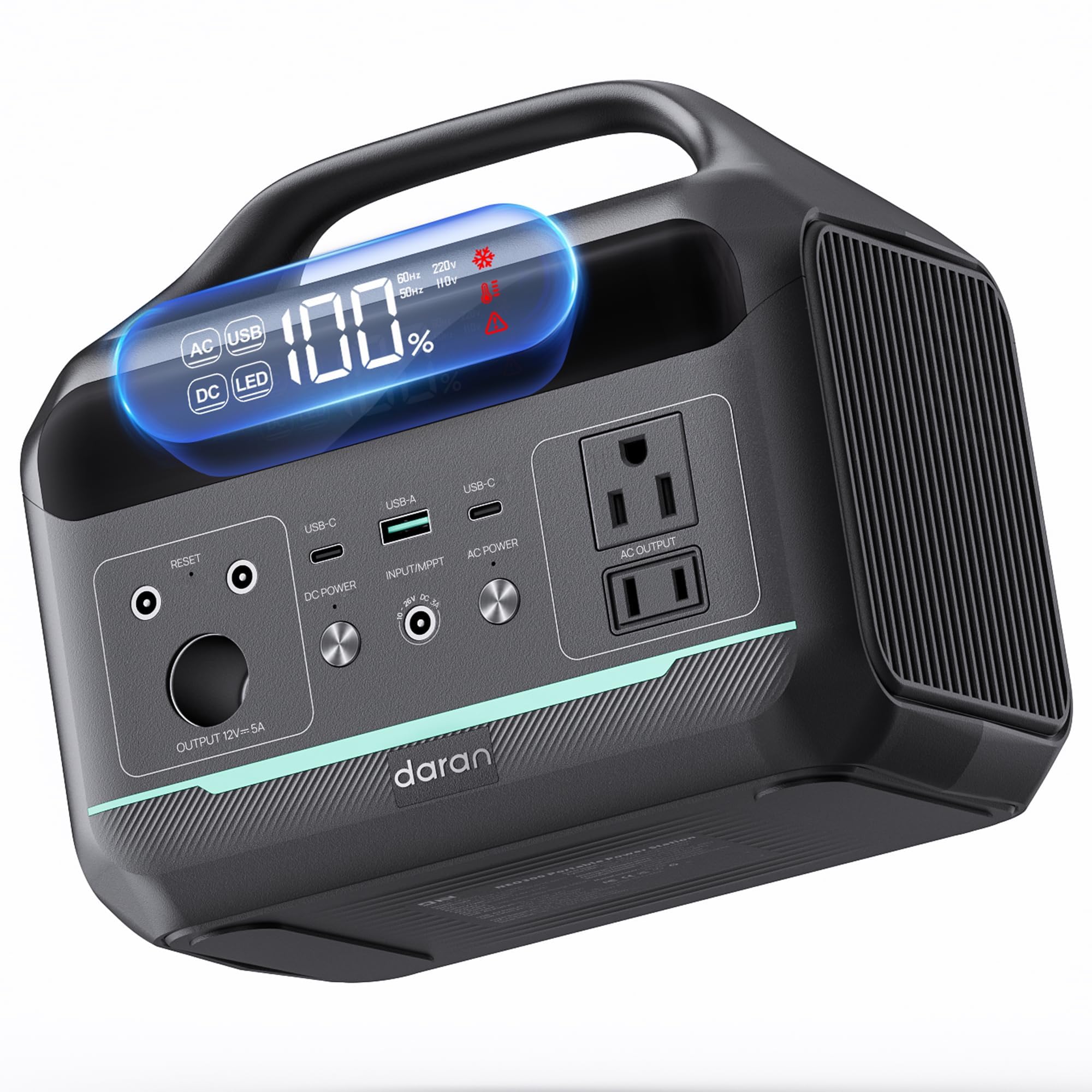
Daran 300 W, 192 Wh LiFePO4
For: A drawer unit for phones, a lamp and a router
What the listing says: 192 Wh LiFePO4, 300 W continuous (600 W surge), 60 W USB-C PD, LED light, pass-through charging.
Before you buy: 192 Wh is a big power bank with an AC socket: a night of router or about ten phone charges, and no fridge. Pass-through charging is the useful feature here; it lets a small solar panel top it up while it feeds a phone.
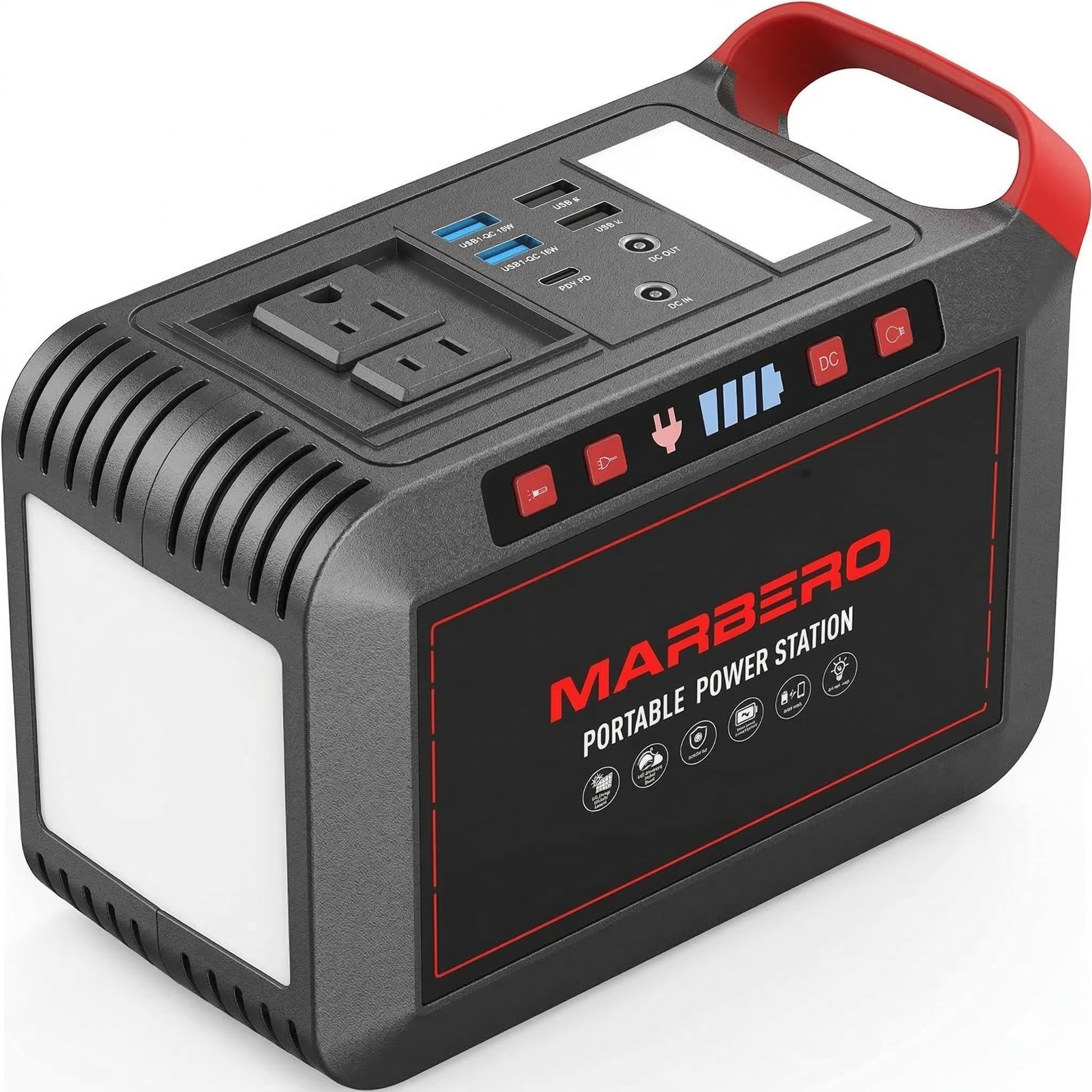
Marbero 300 W, 237 Wh
For: Most of one CPAP night, or a car kit
What the listing says: 237 Wh lithium battery, 300 W pure-sine AC outlet, USB-C and USB-A, DC ports; marketed for camping, CPAP and backup.
Before you buy: The listing states lithium, not LiFePO4: fine for use, less good for sitting charged for months. A CPAP without a humidifier gets most of one night at 30 W and about half a night at 60 W; with the heated humidifier on, far less. Recharge it every three months in storage.
One-appliance class: 1-2 kWh
Half a day to a day of refrigerator, or two to four nights of CPAP. The apartment sweet spot.

EcoFlow DELTA 3, 1,024 Wh
For: The apartment unit: a fridge for 11-22 hours or a CPAP for 2-4 nights
What the listing says: 1,024 Wh LiFePO4, 1,800 W output, fast charging, multiple AC and DC ports.
Before you buy: Eighteen hundred watts means it will run a kettle — and the kettle will take a tenth of the battery in five minutes. Decide before the outage which one appliance it is for, and keep the cooking on gas.

Jackery Explorer 1000 v2, 1,070 Wh
For: The same job from the other big name
What the listing says: 1,070 Wh LiFePO4, 1,500 W output, 100 W USB-C, multiple AC outlets, fast charge.
Before you buy: Jackery recommends its own solar panels and adapters; if you already own a panel, check the connector and the input limit before assuming it will refill this. Otherwise a near-twin of the DELTA 3: buy on the ecosystem you have.
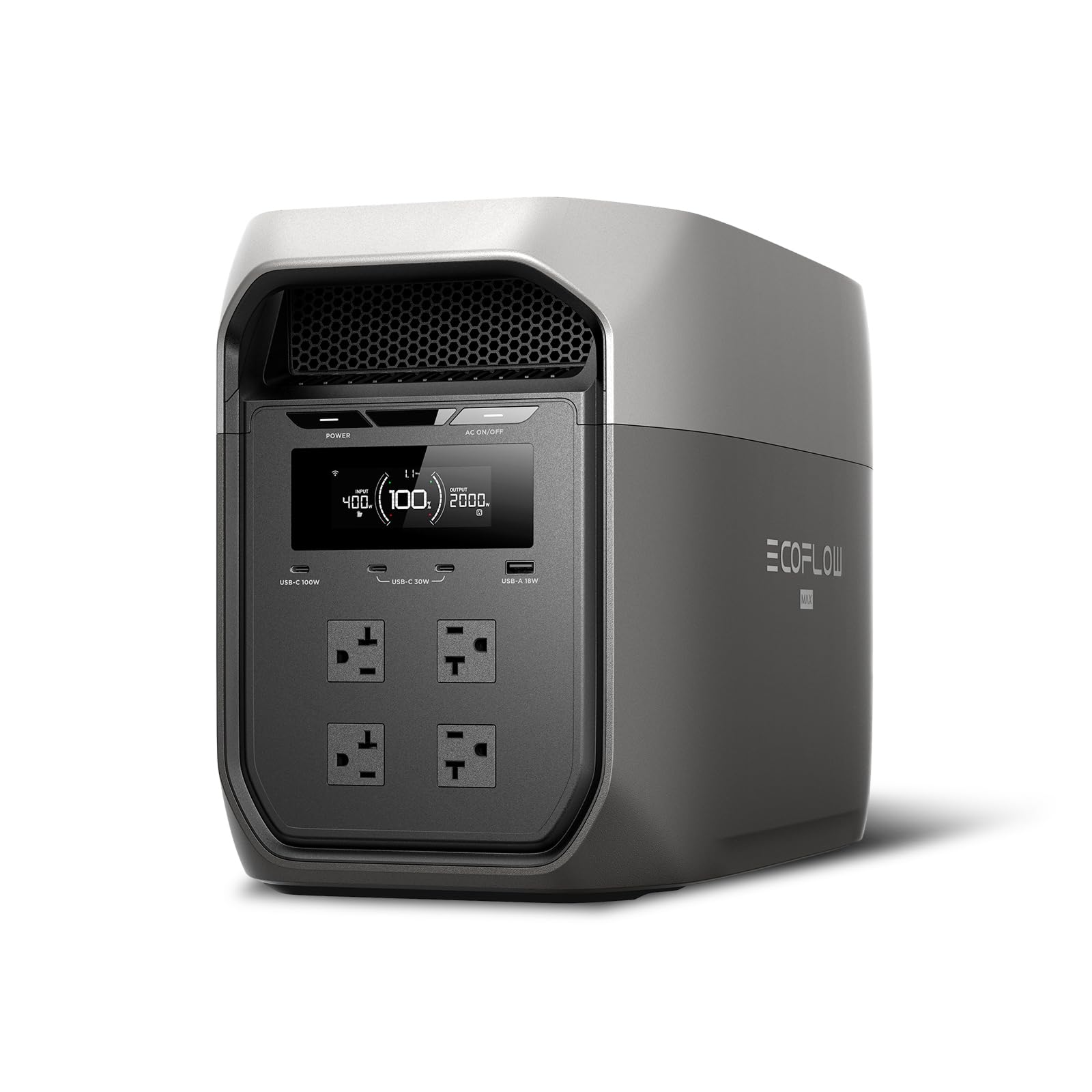
EcoFlow DELTA 3 Max, 2,048 Wh
For: One to two days of fridge, or fridge plus router plus phones
What the listing says: 2,048 Wh LiFePO4, 2,400 W output, fast 0-80% charging, multiple AC and DC ports, display.
Before you buy: Two kilowatt-hours weighs what a full suitcase weighs; it lives where it is used. It is also the first unit here that justifies a 200 W panel — check the solar input ceiling on the listing before pairing them.
Whole-circuit class: 5 kWh and up
For a house with a transfer switch, not an apartment.
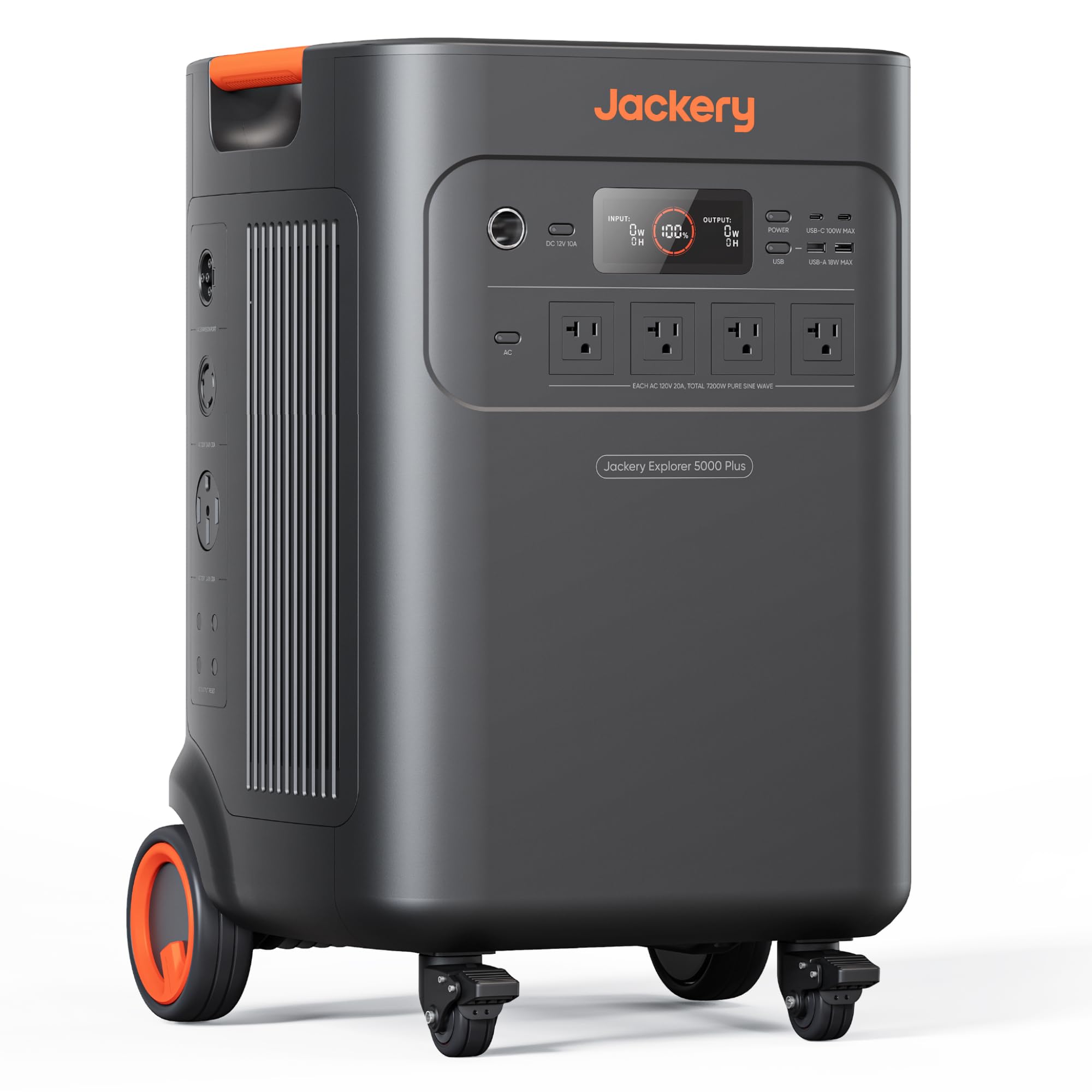
Jackery Solar Generator 5000 Plus, 5,040 Wh
For: A house with a transfer switch and a garage
What the listing says: 5,040 Wh LiFePO4, 7,200 W 120/240 V output, expandable, marketed for whole-home backup.
Before you buy: This is a home-backup system that plugs into a transfer switch installed by an electrician; in an apartment it is a very heavy way to run a fridge. It is on this page so the scale is visible, not as a recommendation for a flat.
Using one safely indoors
- It is a battery, not a generator: no exhaust, safe in a room. Ready.gov’s 20-feet-from-windows rule is for fuel generators and camp stoves, and stays that way.
- Plug appliances into the station, never the station into a wall socket. Feeding the building’s wiring requires a transfer switch and an electrician.
- Keep it charged and cool. Store at 50-80%, top up every three months, and never charge it on a bed or under a blanket. Ready.gov’s tech guidance applies: charge everything before the storm.
- Know the recharge plan: the wall while it works, the car’s 12 V socket on the road, a panel outside on day two.
Our apartment outage guide covers the rest — food, water, heat and light — and the supply calculator sizes the days.
FAQ
Can a portable power station run a refrigerator?
Read the yellow EnergyGuide label: kWh per year divided by 8.76 is the average draw. A fridge rated 400 kWh a year (about 46 W) runs roughly 19 hours on a 1 kWh unit and a day and a half on a 2 kWh unit; a 700 kWh side-by-side (80 W) gets about 11 and 22 hours. Keeping the door shut matters more than the extra battery: a closed fridge holds temperature for hours on its own.
How big a station do I need for a CPAP?
Without the heated humidifier, 30-60 W: a 300 Wh unit covers about one night at the low end of that range, a 1 kWh unit two to four nights. With the humidifier and heated tube the draw multiplies; turn them off on battery.
LiFePO4 or lithium-ion?
LiFePO4 for anything that will sit charged in a closet: it tolerates storage and delivers thousands of cycles. Standard lithium-ion is lighter per watt-hour and fine for a unit used often.
Preparing with Dan is reader-supported: as an Amazon Associate we earn from qualifying purchases. Product details are as stated on the retailer listings at the time of writing; check the listing before you buy.
Official sources & further reading
The guidance in this article comes from official sources. Consult them directly for the authoritative version:

Dan Lockland is a preparedness instructor and survival skills educator with over 15 years of hands-on experience. He shares practical, no-nonsense guidance on emergency preparedness, self-reliance, and sustainable living at PreparingWithDan.com.