
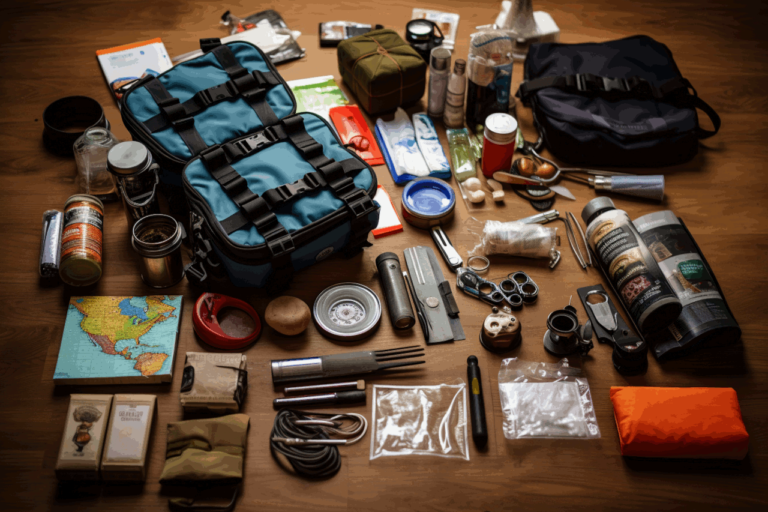
The American Red Cross publishes the contents of a first aid kit for a family of four, and it comes to roughly sixty items: dressings, roller and triangular bandages, gloves, a breathing barrier, a cold compress, a thermometer, tweezers, tape, ointments and 25 adhesive bandages. A “516-piece” kit is not eight times that kit; it is that kit with four hundred extra adhesive bandages and cotton buds. Buy on the presence of the sixty, and on the four things the Red Cross list does not include and a serious injury needs: a tourniquet, a pressure dressing, a chest seal and the training to use them.
Six kits below, compared on what the listings say against the Red Cross list, with the catch for each. Piece counts are the marketing; the checklist is the standard. No scores, no prices. A kit does nothing without hands that know how to use it: the Red Cross first aid course is a few hours and the single best purchase on this page.
The checklist, and the four things beyond it
From the Red Cross list for a family of four: 2 absorbent compress dressings (5 × 9 in), 25 adhesive bandages, cloth tape, 5 antibiotic ointment and 5 antiseptic wipe packets, 2 aspirin packets, an emergency blanket, a breathing barrier with one-way valve, an instant cold compress, 2 pairs of non-latex gloves, 2 hydrocortisone packets, a 3 in and a 4 in roller bandage, 5 gauze pads of 3 × 3 and 5 of 4 × 4, a non-mercury oral thermometer, 2 triangular bandages, tweezers, and first aid instructions. Add personal medications and emergency numbers.
What that list is for is cuts, sprains, burns, fevers and minor wounds. What it is not for is life-threatening bleeding, which is the injury the Stop the Bleed programme (born of the 2012 Sandy Hook response and run by the American College of Surgeons) trains the public to treat: a windlass tourniquet (CAT or SOF-T type), an emergency pressure dressing (Israeli-type), chest seals, and packing gauze. A family kit that has these has a trauma layer. A kit that lists a tourniquet should show what kind: a rubber band with a plastic buckle is not one.
At a glance
| Product | Best for | Pieces / trauma items (listing) |
|---|---|---|
| Rapid Care 300+ piece kit with tourniquet, Israeli bandage and splint | The one on this page with a real trauma layer | 300+ / tourniquet, pressure dressing, splint |
| Care Science 300-piece all-purpose kit | The kitchen drawer and the everyday cut | 300 / none stated |
| CAREWOOH 516-piece kit, waterproof case | A car or garage kit with room to add to | 516 / not stated |
| TLIEAO 430-piece kit in a carry bag | A family of four at home, plus camping | 430 / not stated |
| TLIEAO 400-piece dual-layer wall-mountable kit | A fixed kit on the garage or utility-room wall | 400 / wall mount |
| Vriexsd 400-piece kit, waterproof bag | A boat, a road trip, a sports bag | 400 / waterproof bag |
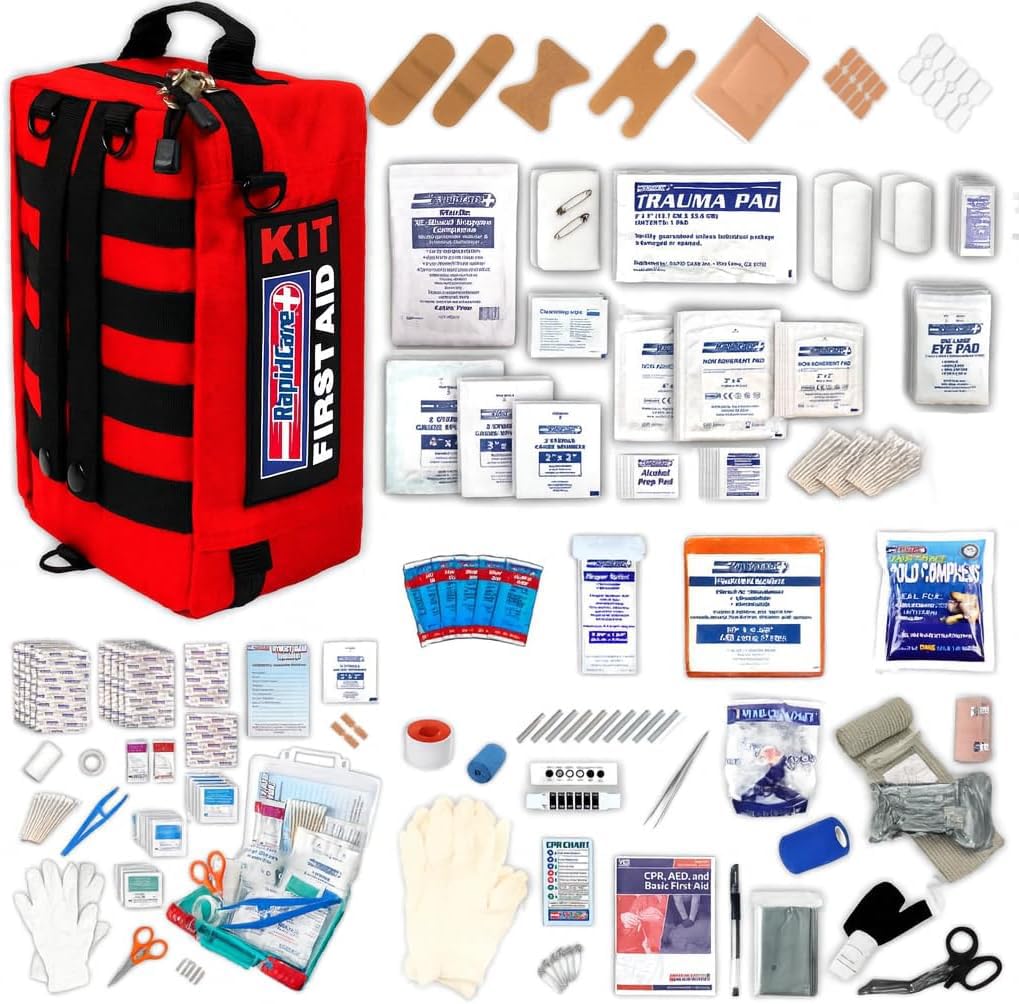
Rapid Care 300+ piece kit with tourniquet, Israeli bandage and splint
For: The one on this page with a real trauma layer
What the listing says: 300+ pieces colour-coded and labelled, plus a 95-piece travel pack; listing names a tourniquet, an Israeli bandage and a splint.
Before you buy: Check the tourniquet type in the photos before trusting it: a windlass model is the standard. Then take the Stop the Bleed class; a tourniquet applied wrong is decoration.
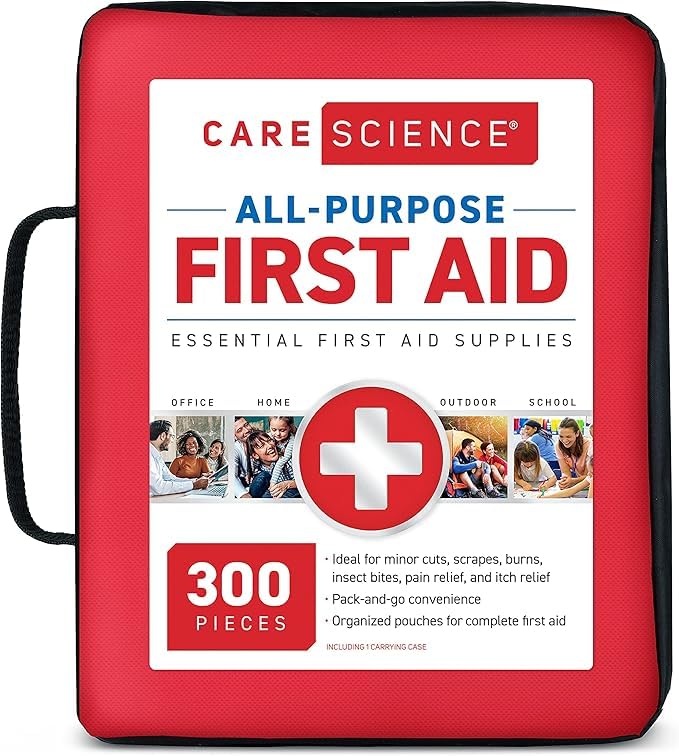
Care Science 300-piece all-purpose kit
For: The kitchen drawer and the everyday cut
What the listing says: 300 pieces: antiseptic, bandages, burn ointment, scissors, tweezers in a portable red case.
Before you buy: Everyday-injury kit, honestly labelled as such. No pressure dressing, no tourniquet: it is the Red Cross list without the roller bandages. Fine for the kitchen; not the car kit for a highway.
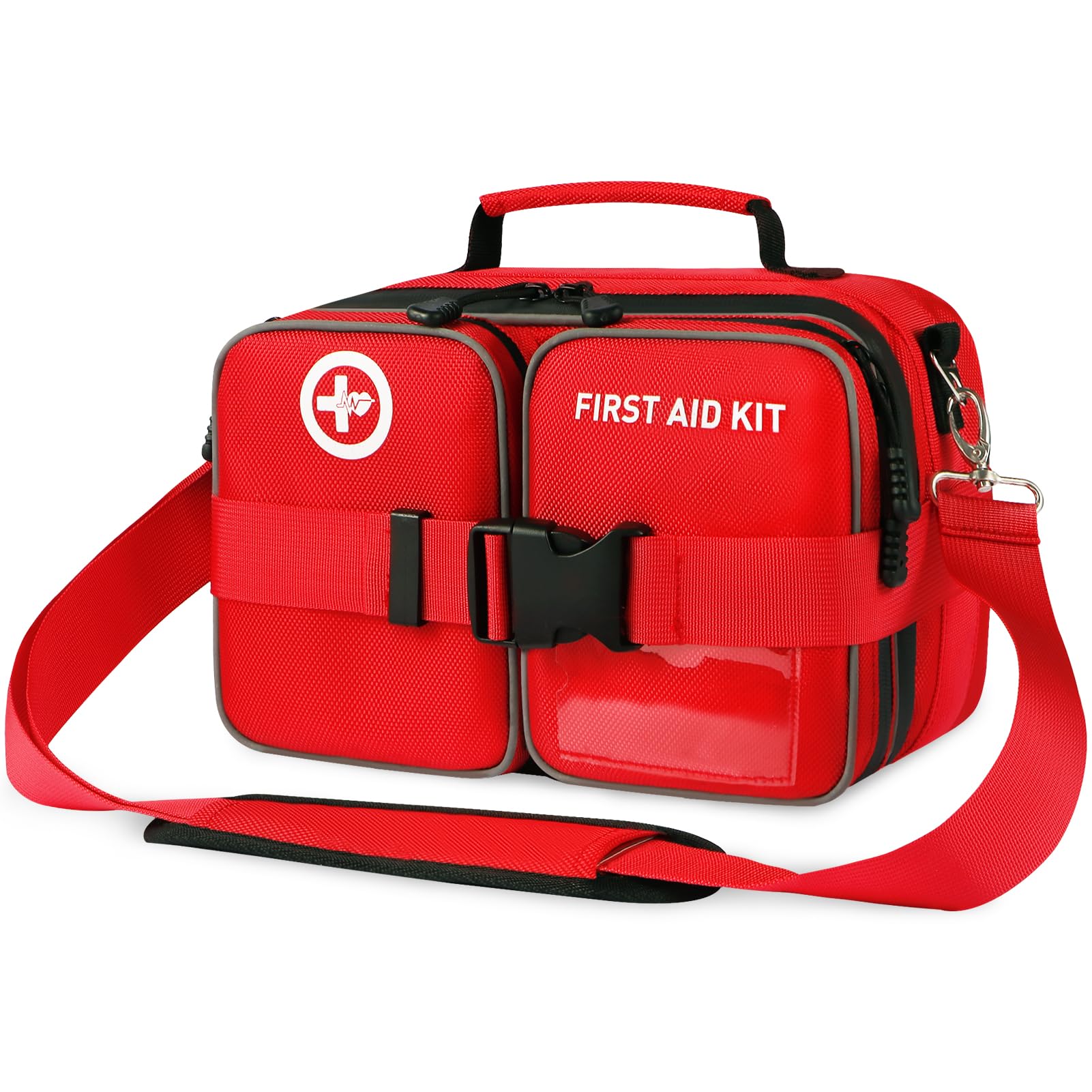
CAREWOOH 516-piece kit, waterproof case
For: A car or garage kit with room to add to
What the listing says: 516 pieces in a 1680D polyester waterproof case with organised pockets; marketed for car, home and travel.
Before you buy: Five hundred pieces is a case, a lot of adhesive bandages and a good set of pockets. Count the dressings and roller bandages against the Red Cross list on arrival, then use the empty pocket for a tourniquet and a pressure dressing bought separately.
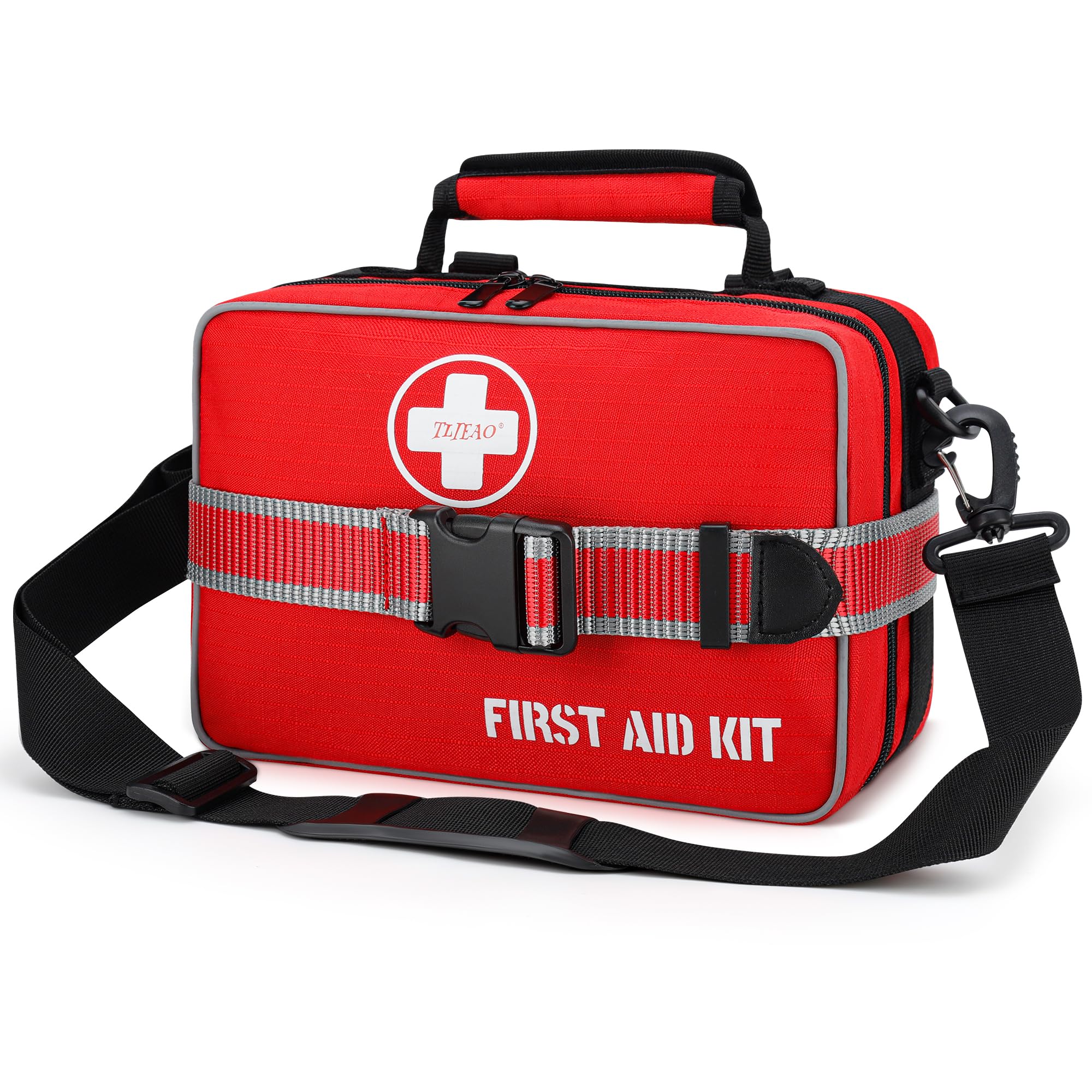
TLIEAO 430-piece kit in a carry bag
For: A family of four at home, plus camping
What the listing says: 430 pieces in a 1680D polyester bag with handle and dedicated pockets; home, car and camping.
Before you buy: Same story as every high-count bag: good organisation, unknown trauma layer. The listing does not name a tourniquet or pressure dressing, so assume there is none and add them.
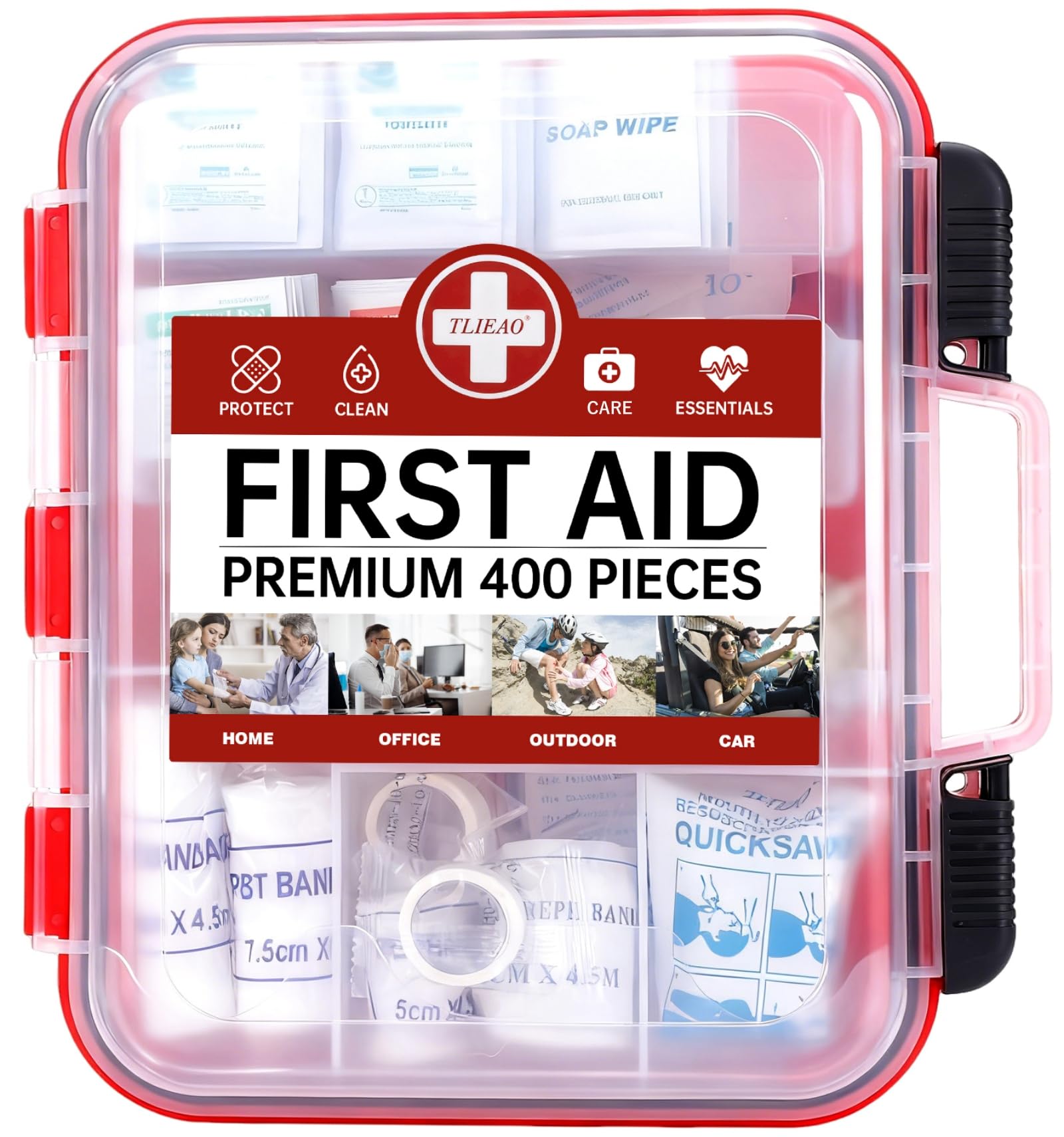
TLIEAO 400-piece dual-layer wall-mountable kit
For: A fixed kit on the garage or utility-room wall
What the listing says: 400 pieces in a two-layer reusable plastic case that mounts on a wall.
Before you buy: A hard case on the wall is the right home for the kit everyone knows the location of. It is not the one you grab for the car. Check the lid latches survive being opened by a child in a hurry.

Vriexsd 400-piece kit, waterproof bag
For: A boat, a road trip, a sports bag
What the listing says: 400 pieces in a portable waterproof bag with organised compartments; home, car, travel, camping, sports.
Before you buy: Waterproof matters for a boat or a kayak and for nothing else on this page. The compartments are the value; the pieces are the usual mix. Same additions as the others.
Buy the kit, then fix it
- Open it on the day it arrives and check it against the Red Cross list. Most kits are short on roller bandages, triangular bandages and absorbent dressings, and long on adhesive strips.
- Add the trauma layer if the listing did not name one: a windlass tourniquet, a 4 or 6 in emergency pressure dressing, a pair of chest seals, a roll of packing gauze. These four cost less than most of the kits and are the difference between a kit and a first-aid-themed bag.
- Add the personal layer: a week of each family member’s medication, a child’s dosing sheet, the paediatrician’s number, an EpiPen if anyone needs one, spare glasses.
- Take the class. Red Cross first aid and CPR, and Stop the Bleed, are a few hours each. Our family emergency plan puts the medical inventory in the plan; the kit is where it lives.
- Date it. Ointments and sterile items expire. Check every six months, when the clocks change, with the rest of the 72-hour kit.
FAQ
How many pieces should a family first aid kit have?
The Red Cross list for a family of four is about sixty items. Kits with 300 to 500 pieces reach those numbers with adhesive bandages and cotton buds; judge them on the sixty, not the total.
Do I need a tourniquet at home?
Uncontrolled bleeding is the injury that kills in minutes, and it happens with kitchen knives, glass and power tools, not only on highways. A windlass tourniquet and a pressure dressing, plus the Stop the Bleed class, are the additions we would make to every kit on this page.
Kit or build your own?
A kit gives you the case and the small consumables cheaply. Building your own gives you better dressings and no filler. The practical answer is a kit plus the trauma and personal layers added.
Preparing with Dan is reader-supported: as an Amazon Associate we earn from qualifying purchases. Product details are as stated on the retailer listings at the time of writing; check the listing before you buy.
Official sources & further reading
The guidance in this article comes from official sources. Consult them directly for the authoritative version:

Dan Lockland is a preparedness instructor and survival skills educator with over 15 years of hands-on experience. He shares practical, no-nonsense guidance on emergency preparedness, self-reliance, and sustainable living at PreparingWithDan.com.