
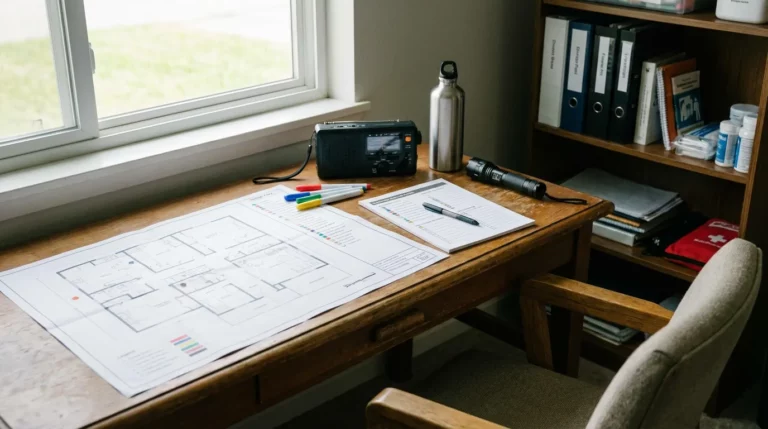
Most families plan their emergency kit around the adults and kids — and forget entirely about Mom or Dad until the hurricane is 48 hours out. Elderly family members need their own section of your emergency plan, built around their specific medications, mobility limitations, and cognitive needs. Here’s how to do it, step by step, before you need it.
Table of Contents
- Why Seniors Are the Most Vulnerable in Any Emergency
- The Medication Checklist: What to Stockpile and How
- Evacuation Planning for Limited Mobility
- Home Safety Modifications That Actually Matter
- Communication Plans When Phones Fail
- Planning for Cognitive Decline: The Dementia Consideration
- Senior-Specific Emergency Supplies Checklist
- Common Mistakes Families Make
- FAQ
Why Seniors Are the Most Vulnerable in Any Emergency
During Hurricane Katrina, 71% of the deaths were people over age 60 — despite seniors making up only 15% of the affected population. FEMA’s own data consistently shows that older adults are disproportionately at risk, not because emergencies are harder on their bodies, but because most emergency plans aren’t built with them in mind.
If you have an elderly parent, in-law, or grandparent in your household or nearby, their needs belong in your plan just as much as your kids’ do. The difference is that elderly needs are more specific — and the consequences of getting it wrong are more severe.
The Medication Checklist: What to Stockpile and How
Medications are the single highest-stakes item in elderly emergency preparedness. Running out of blood pressure medication on day 3 of a power outage is a medical emergency.
What to stockpile:
- A minimum 30-day supply of all prescription medications (request 90-day fills from your doctor — most insurers allow this)
- All over-the-counter medications they use regularly (pain relievers, antacids, stool softeners)
- A written list of every medication, dose, frequency, and prescribing doctor — laminated, stored in the emergency kit AND photographed in your phone
- Spare glasses, hearing aid batteries (stock 3–6 months’ worth), and any assistive device supplies
- Insulin and diabetic supplies if applicable — note: insulin needs refrigeration, so have a plan for power outages
Evacuation Planning for Limited Mobility
Your evacuation plan is only as fast as your slowest family member. For elderly adults with walkers, wheelchairs, or limited stamina, that speed can be a fraction of what you’ve planned for.
Build this into your plan now:
- Designate a specific person responsible for each elderly family member during an evacuation. Not “whoever is available” — a named person with a backup.
- Pre-plan your route for wheelchair access. Walk it. Stairs that you don’t notice become a real obstacle when someone can’t use them.
- Register with your local Special Needs Shelter registry if your county has one (most do). This ensures emergency services know your family member needs assistance during a mandatory evacuation.
- Keep the car gas tank above half. Full-tank rule for households with elderly or mobility-limited family members — always.
- Practice the evacuation. A 78-year-old with hip replacement moves differently than you think she does on a Sunday afternoon versus 3 AM in a hurricane.
| Mobility Situation | What to Prepare | What to Register For |
|---|---|---|
| Walker / cane user | Portable folding walker for travel, non-slip shoes, extra cane | Local special needs shelter registry |
| Wheelchair user | Accessible vehicle or accessible transport contact, manual backup if electric chair | County disability services emergency list |
| Oxygen-dependent | Portable oxygen concentrator + battery backup, 48-hr tank supply | Local fire department (they prioritize O2-dependent residents) |
| Limited stamina | Wheelchair for extended evacuations even if not used daily, frequent rest stops in plan | Special needs shelter |
Home Safety Modifications That Actually Matter
The most dangerous place for an elderly person during an emergency isn’t outside — it’s in their own bathroom at 2 AM during a power outage. Most elder-care emergencies at home are preventable falls, not disasters.
Priority modifications by impact:
- Grab bars in the shower and next to the toilet — not the suction-cup kind. Wall-anchored into studs. A person grabbing for support during a fall puts 200+ lbs on that bar. $30–$60 installed.
- Non-slip mats in the bathroom, kitchen, and any transition between floor surfaces
- Nightlights on every floor — motion-activated with battery backup for power outages
- Smoke and CO detectors on every floor, with models that have extra-loud alarms or vibrating alerts for hearing-impaired users
- Clear pathways — walk the house and remove everything that could catch a walker or cane. Rugs are the #1 fall hazard for seniors.
Communication Plans When Phones Fail
Elderly adults are more likely to have landlines and less likely to have fully charged smartphones. Your family communication plan needs to account for this.
- Designate an out-of-state contact that everyone calls or texts to check in. Local lines get overloaded in regional disasters — out-of-state calls often go through when local ones don’t.
- Write down phone numbers. Many elderly adults don’t have numbers memorized because they’re stored in a phone. Print a laminated card with 5 key numbers and keep it with their emergency kit.
- Set up a group text that includes all family members who might be checking on an elderly relative. Reduces duplicate calls and missed check-ins.
- Know the address of their nearest emergency shelter in advance — not just “the shelter,” but the actual address, written down.
Planning for Cognitive Decline: The Dementia Consideration
This is the section most guides skip. If your elderly family member has dementia, Alzheimer’s, or any cognitive impairment, your emergency plan looks meaningfully different.
- Do not rely on verbal instructions during an emergency. A person with dementia who is frightened will not process a 5-step evacuation plan. They need a calm, familiar person guiding them physically.
- ID bracelet with name, address, and emergency contact — non-negotiable if there’s any wandering risk. Medical ID bracelets are $15–$30 and can be the difference between a lost person and a found person.
- Bring familiar comfort items in the emergency bag — a favorite photo, a familiar blanket, anything that anchors them in distress.
- Notify emergency services in advance. Many counties have a “vulnerable adults” registry that flags an address as having a cognitively impaired resident.
Senior-Specific Emergency Supplies Checklist
| Category | Items | Quantity Target |
|---|---|---|
| Medications | All prescriptions + OTC regulars + written list (laminated) | 30-day supply minimum |
| Medical devices | Spare glasses, hearing aids + batteries, denture adhesive | 2-week+ supply of consumables |
| Power-dependent devices | CPAP + battery backup, O2 concentrator battery, medical alert device charger | 48–72 hr backup power minimum |
| Mobility aids | Backup cane/walker if used, non-slip socks, extra incontinence supplies if needed | 3–5 day supply |
| Food and water | Soft foods if chewing is limited, 1 gal/day water, favorite non-perishable snacks | 72-hour minimum |
| Documents | Insurance cards, Medicare/Medicaid info, DNR or advance directive if applicable, photo ID | Copies in kit + phone photo |
| Comfort items | Familiar photos, preferred blanket, hand lotion, anything that reduces anxiety | As needed |
Common Mistakes Families Make
- Building the plan without them. Elderly family members should be part of the planning conversation, not just subjects of it. They know their own needs better than you do, and being included reduces panic during an actual emergency.
- Assuming someone else has it covered. “My brother lives closer” is not a plan. Name a primary responsible person, name a backup, and make sure both of them know it explicitly.
- Forgetting power-dependent medical devices. CPAP machines, oxygen concentrators, electric wheelchairs, and insulin refrigeration all require power. A 24-hour power outage becomes a medical emergency without a backup plan for each device.
- Not registering with local emergency services. Special needs shelter registries, fire department vulnerability lists, and county disability services programs exist specifically for this. Most families don’t know about them until they’re in a crisis.
- Reviewing the plan once and never again. An elderly family member’s mobility, medications, and cognitive status can change significantly in 6 months. Set a calendar reminder to review the plan every 6 months, not every few years.
FAQ
What’s the most important thing to prepare for an elderly family member?
Medications, by a wide margin. A 30-day supply of all prescriptions, a laminated written list with doses and prescribing doctors, and a backup copy on your phone. Running out of blood pressure or heart medication during a multi-day emergency is a life-threatening situation that’s completely preventable with 20 minutes of planning.
How do I evacuate an elderly parent who uses a wheelchair?
Register with your county’s Special Needs Shelter registry now — not during an emergency. Also contact your local fire department, which often maintains a list of mobility-impaired residents to prioritize in evacuations. Have a specific family member designated (not just “whoever is available”) and walk the actual evacuation route to check for accessibility issues before you need it.
What should I do if my elderly parent has dementia?
Don’t rely on verbal instructions during an emergency. Have a familiar person guide them physically and calmly. Put an ID medical bracelet on them with your contact number — always, not just in emergencies. Bring comfort items in the emergency bag. Register with your county’s vulnerable adults program so emergency services know your address.
How much medication should I stockpile for an elderly family member?
A minimum of 30 days, ideally 90. Ask your doctor for 90-day fills — most insurers allow this for chronic medications. Keep the stockpile separate from daily-use medications and rotate it: use the oldest supply first and replace it. Store a written list in the emergency kit and photograph it to your phone.
How often should I review the emergency plan for an elderly family member?
Every 6 months. Medications change, mobility changes, and cognitive status changes — sometimes faster than you expect. Put it on the calendar. A plan built for your parent at 75 may be significantly wrong by 77. Review it, update the medication list, verify emergency contacts are still reachable, and walk through the evacuation route together.
Next Step
If you haven’t built your family emergency plan yet, start there — elderly family members should be a section within it, not a separate afterthought. See our Step-by-Step Family Emergency Plan for the full framework, then come back and add the elderly-specific elements from this guide.
Last Updated: April 2026
Official sources & further reading
The guidance in this article aligns with official emergency-preparedness resources. Consult them for the authoritative version:

Dan Lockland is a preparedness instructor and survival skills educator with over 15 years of hands-on experience. He shares practical, no-nonsense guidance on emergency preparedness, self-reliance, and sustainable living at PreparingWithDan.com.