
Ready.gov’s water rule is a gallon per person per day for drinking and sanitation, for several days. For a family of four and three days that is 12 gallons: about 100 pounds and roughly one and a half cubic feet. Two weeks is 56 gallons. The container question in an apartment is not which is best but where 100 pounds of water can sit — and Ready.gov’s storage rules settle the rest: food-grade containers, sanitised with a teaspoon of unscented bleach per quart before filling, and replaced every six months unless it is commercially bottled.
Six containers below, from a pair of stackable 5-gallon jugs to a set of interlocking bricks, compared on what the listing states — capacity, material, spigot, footprint — with the catch for each. No scores, no prices. The supply calculator gives your household’s gallons; this page is about where they go.
What Ready.gov says about storing your own
- Commercially bottled water first, kept sealed in a cool, dark place. Cases of bottles are the easiest apartment store: they stack, they portion, and the date is printed on them.
- Food-grade containers if you fill your own. HDPE marked food-safe or BPA-free; never a container that held anything other than food or water.
- Sanitise before filling: wash with dish soap, then a solution of one teaspoon of non-scented household bleach per quart of water, then fill with chlorinated tap water.
- Replace every six months unless treated with a preserver per its label; write the fill date on the container.
- Weight: a gallon is about 8.3 lb. A 5-gallon container is 42 lb full — the largest most adults carry — and a floor holds a lot of water without complaint, but a shelf may not.
At a glance
| Product | Best for | Capacity / material / spigot (listing) |
|---|---|---|
| WaterBrick 3.5-gallon interlocking containers, 6-pack | The apartment answer: 21 gallons that stack like bricks | 6 × 3.5 gal / HDPE / spigot sold separately |
| Aguaprep 5-gallon stackable containers, 4-pack | Twenty gallons in a closet corner | 4 × 5 gal / HDPE / spigots |
| Aguaprep 4-pack with water treatment kit | The same containers plus the preserver that stretches the six-month rule | 4 × 5 gal / HDPE / treatment |
| Saratoga 30-gallon kit: six 5-gallon containers, spigots, preserver | A family of four for a week, in one purchase | 6 × 5 gal / HDPE / spigots + preserver |
| Stackable 5-gallon jugs, 2-pack | A couple, a first ten gallons | 2 × 5 gal / plastic / cap only |
| UPWOIGH 5-gallon wide-mouth jug with spigot | The one container that also goes camping and to the car | 1 × 5 gal / HDPE / spigot |
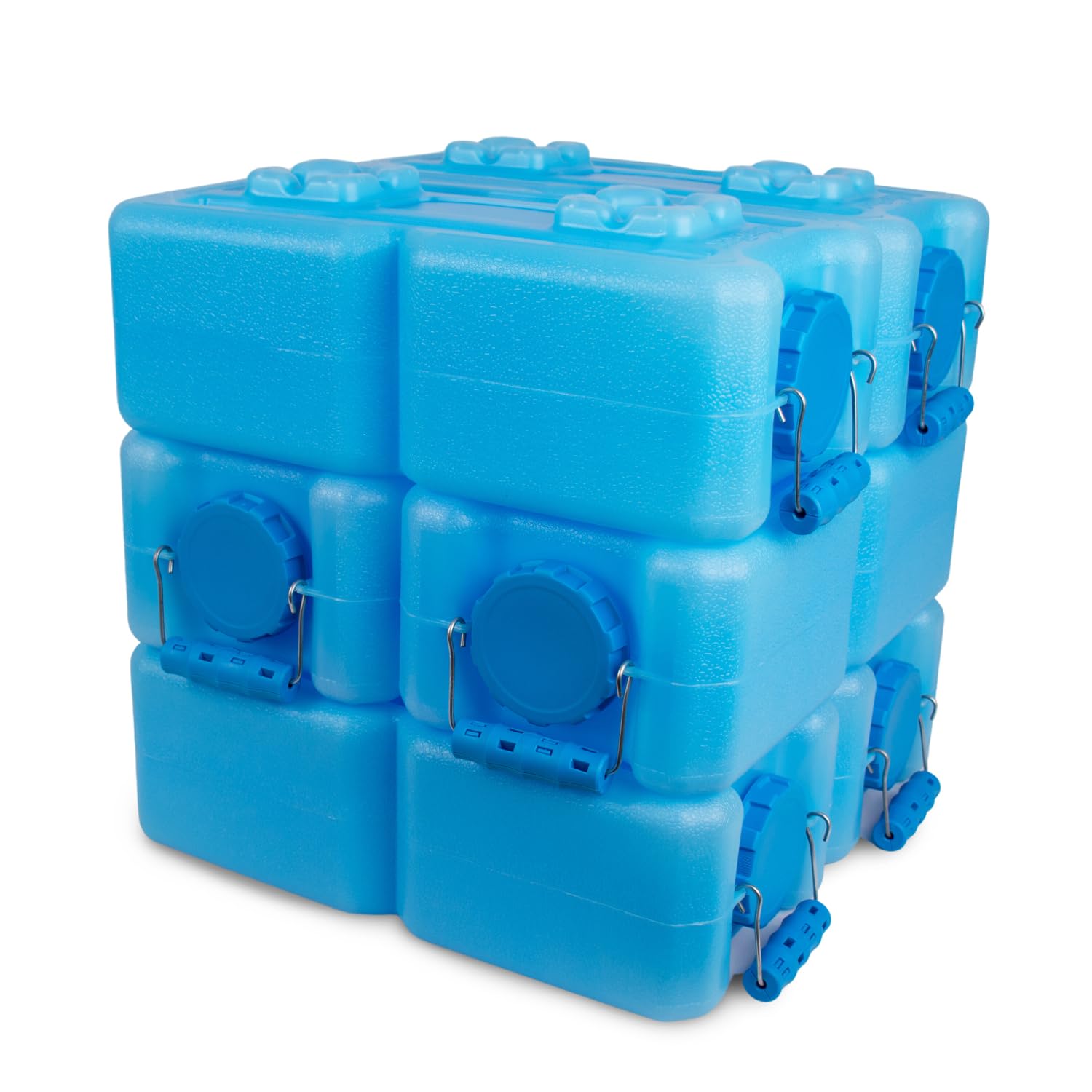
WaterBrick 3.5-gallon interlocking containers, 6-pack
For: The apartment answer: 21 gallons that stack like bricks
What the listing says: Six 3.5-gallon food-grade HDPE containers, BPA-free, rectangular and interlocking for stacking and transport.
Before you buy: Twenty-one gallons is about five days for four people. Each brick is 29 lb full, which a child can slide but not lift; the spigot is an extra purchase. Buy it for the footprint: six bricks make a low, flat block that fits under a bed.

Aguaprep 5-gallon stackable containers, 4-pack
For: Twenty gallons in a closet corner
What the listing says: Four 5-gallon HDPE stackable containers with lids and spigots, easy-fill design.
Before you buy: Stackable when empty and, per the design, when full; check the listing photos for the stacking height and whether the bottom container’s spigot is reachable in the stack. Forty-two pounds each: fill them where they will live.
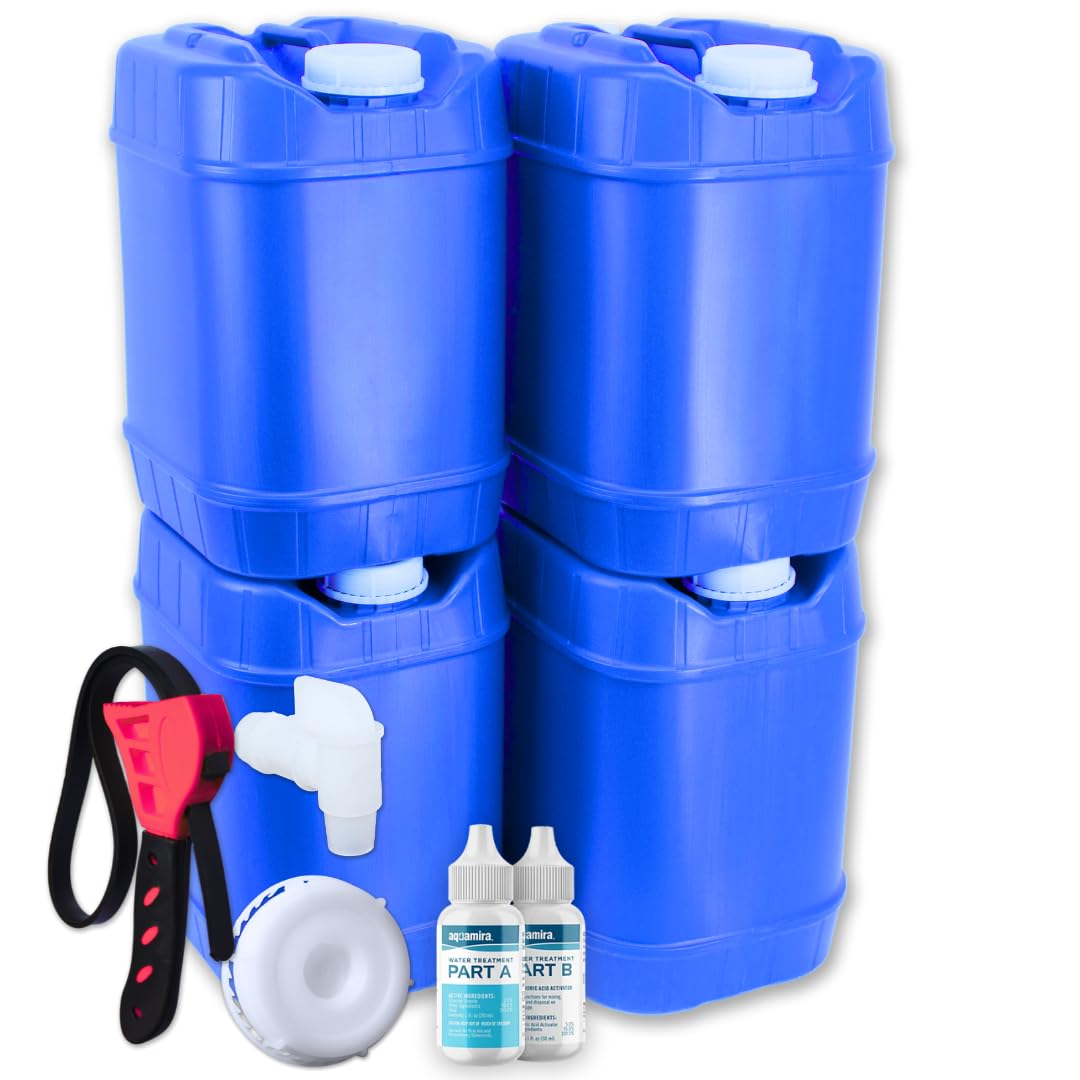
Aguaprep 4-pack with water treatment kit
For: The same containers plus the preserver that stretches the six-month rule
What the listing says: Four 5-gallon food-grade HDPE containers, spigots, wrench, and a two-part water treatment to extend storage.
Before you buy: A preserver replaces the six-month rotation only if used exactly per its label on clean tap water. It does not make questionable water safe. Write the treatment date on each container; the label’s claimed storage period starts then.

Saratoga 30-gallon kit: six 5-gallon containers, spigots, preserver
For: A family of four for a week, in one purchase
What the listing says: Six 5-gallon HDPE stackable containers with lids, spigots, wrench and water preserver — 30 gallons.
Before you buy: Thirty gallons is 250 lb: measure the closet floor before ordering, and never stack full containers above head height. The kit is complete; the rotation discipline is not included.
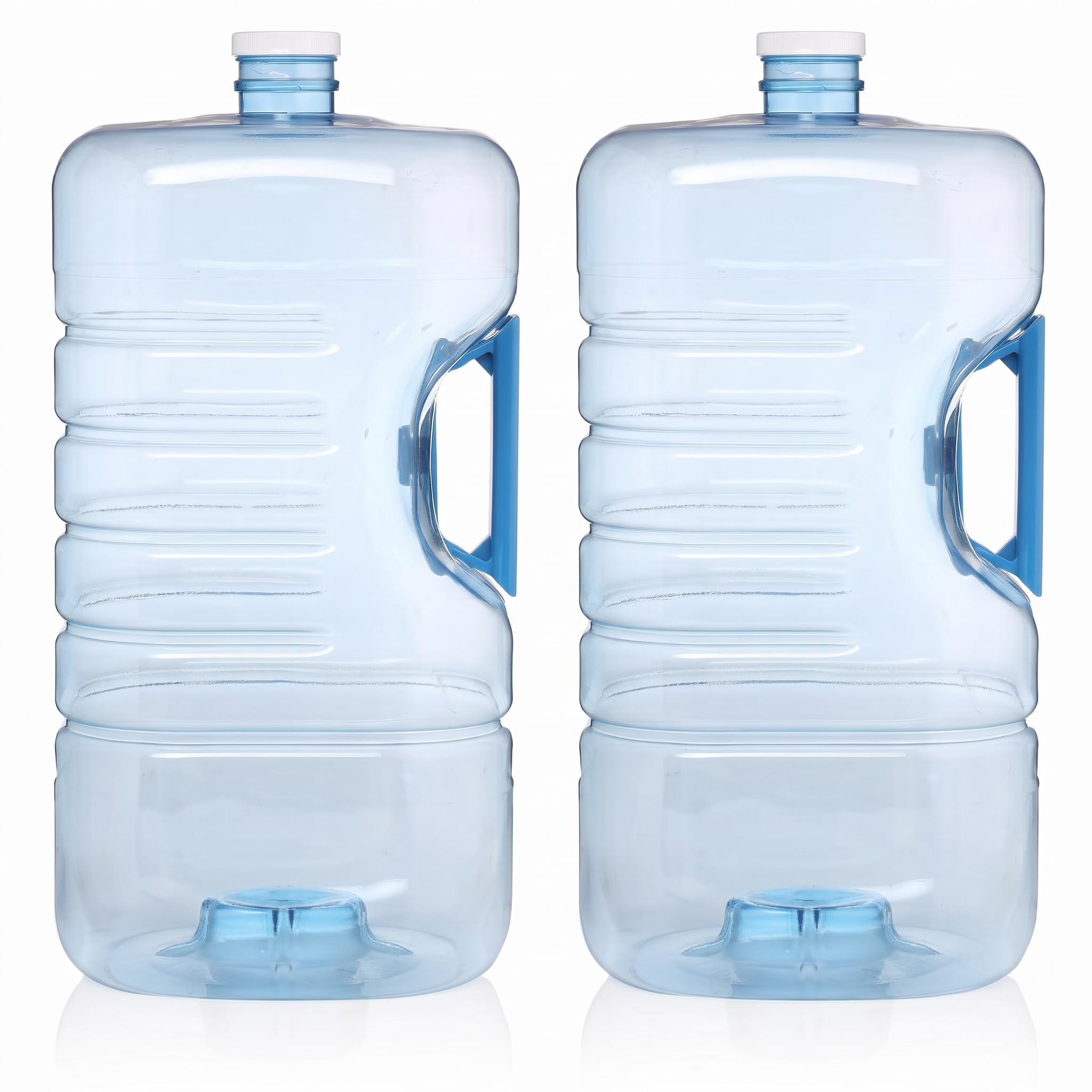
Stackable 5-gallon jugs, 2-pack
For: A couple, a first ten gallons
What the listing says: Two 5-gallon stackable jugs with ergonomic handle and 53 mm screw cap, 9 in × 19 in each, hand-wash only.
Before you buy: A screw cap and no spigot means pouring 42 lb of water to fill a glass; buy a pump or a spigot cap. The listing says plastic, not food-grade HDPE; confirm the material and marking before storing drinking water in it.
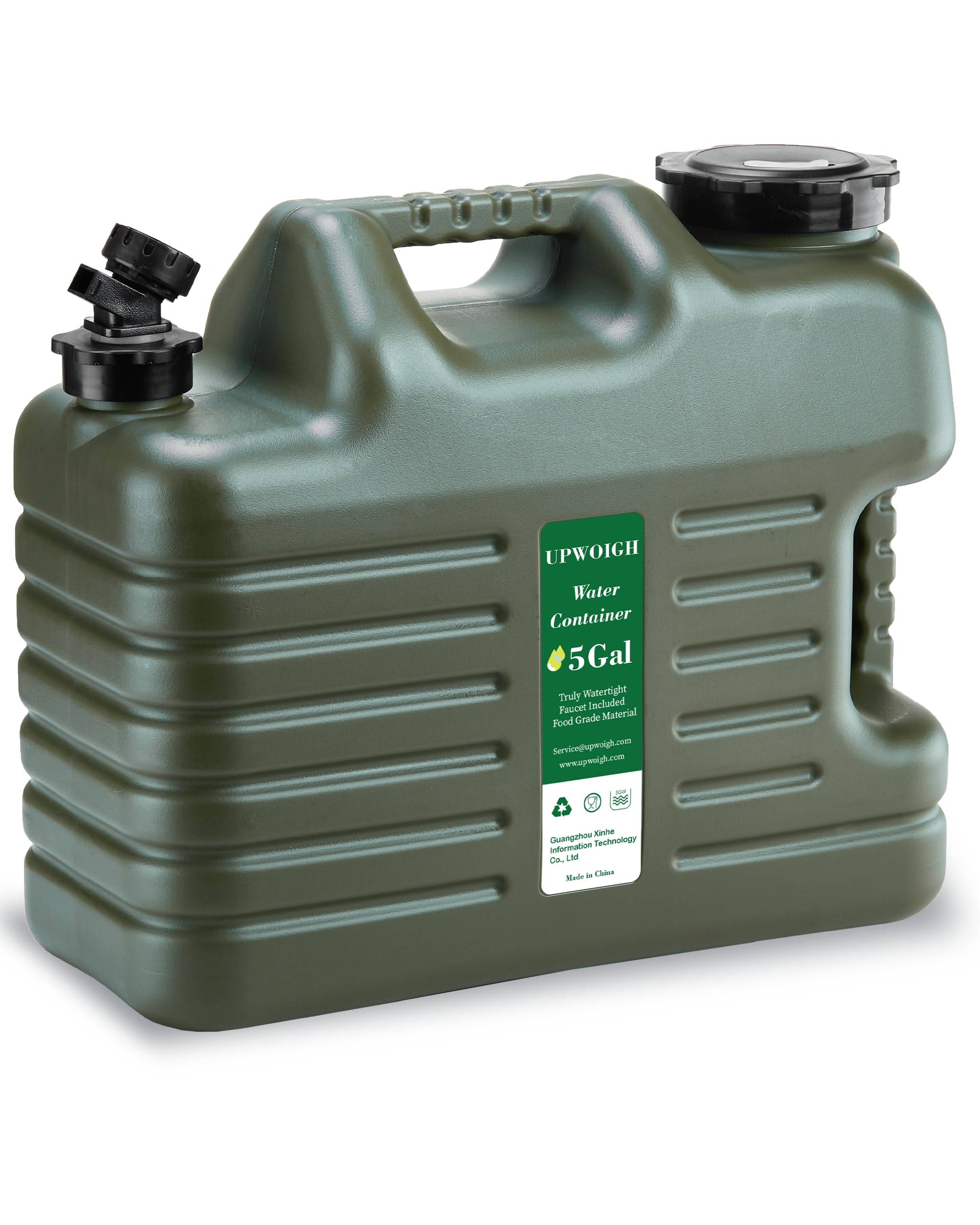
UPWOIGH 5-gallon wide-mouth jug with spigot
For: The one container that also goes camping and to the car
What the listing says: BPA-free HDPE 5-gallon container, wide mouth, spigot and caps included, dual handles, leak-resistant.
Before you buy: The wide mouth is the feature: it can be cleaned properly and filled from a bucket. One is a car kit; four is a household store. Not designed to stack full.
The apartment layout that works
Bottled water cases on the floor of a closet for drinking (they rotate through daily use); a block of bricks or stackable containers, filled and dated, for sanitation and cooking; and a bathtub liner or clean tub as the surge reserve when a storm is forecast — a tub holds 40-plus gallons for flushing and washing. Keep the drinking store and the treatment layer together: our purification tablet review and gravity filter review cover what to do when the stored water is gone and the tap is questionable. The water purification guide is the full ladder.
FAQ
How much water should an apartment store?
Ready.gov: at least one gallon per person per day for several days. Three days for four people is 12 gallons; two weeks is 56. Store what the floor and the closet allow, and keep a filter and tablets for the rest.
How long can I store tap water?
Ready.gov says water that is not commercially bottled should be replaced every six months. A water preserver used per its label extends that; write the date on the container either way.
Can I store water in old milk or juice jugs?
No: sugars and proteins cannot be washed out fully and the plastic degrades. Use food-grade containers made for water, or commercially bottled water in its original packaging.
Preparing with Dan is reader-supported: as an Amazon Associate we earn from qualifying purchases. Product details are as stated on the retailer listings at the time of writing; check the listing before you buy.
Official sources & further reading
The guidance in this article comes from official sources. Consult them directly for the authoritative version:

Dan Lockland is a preparedness instructor and survival skills educator with over 15 years of hands-on experience. He shares practical, no-nonsense guidance on emergency preparedness, self-reliance, and sustainable living at PreparingWithDan.com.