
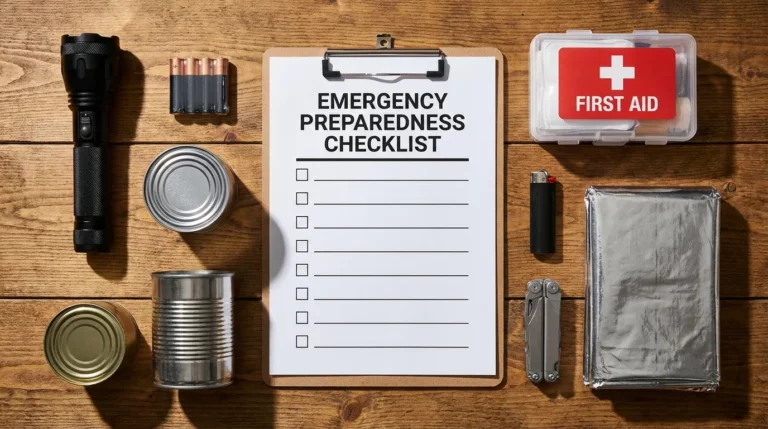
A “survival seed vault” is a food reserve on two conditions, both from University of Minnesota Extension’s seed-saving guidance: the varieties must be open-pollinated (heirloom) rather than hybrid, so the seed you save grows the same plant next year, and the seeds must be kept dry and cold — UMN’s ideal is 32-41°F, which is your refrigerator, not a bunker shelf. Germination and vigour fall every year in storage. The kits below all pass the first test on paper; the second is up to you.
Six kits compared on what the listings state — number of varieties, seed count, packaging — with the catch for each. No scores, no prices. If you are new to this, the kit is the second purchase: our survival gardening guide and small-space gardening guide come first, and the crop that feeds a family is not the one with the most seeds in the bag.
Read the kit like a gardener, not a prepper
- Seed count is not a food figure. 15,000 seeds is mostly lettuce, herbs and radish, which are quick and pleasant and not calories. The plants that feed a household are beans, squash, potatoes (grown from tubers, not seed) and corn. Check that the kit has beans and a winter squash before anything else.
- Open-pollinated is the whole point. UMN: choose open-pollinated varieties rather than hybrids; hybrid seed is viable but the next generation is unpredictable. Every kit here is marketed as heirloom; confirm it on the packet list.
- Storage decides the shelf life. Sealed glass or foil, a desiccant, and the fridge. The Mylar bag in the kit is the transport packaging; once home, the seeds go cold. UMN’s rule for saved seed is to use it within a year; commercial seed lasts longer but declines the same way.
- Grow it once before you need it. A kit that has never been opened is an untested plan. Plant a few packets this season; the germination rate you see is the number that matters.
At a glance
| Product | Best for | Varieties / seeds / packaging (listing) |
|---|---|---|
| Gardeners Basics survival vegetable seed kit | A first serious garden with staples | Staples / 16,000 / markers |
| Organo Republic 55-variety vegetable pack | Variety for someone who will actually garden this year | 55 varieties / 35,600 |
| Open Seed Vault, 15,000 heirloom seeds | The stored reserve, opened once a year to test | Heirloom / 15,000 / sealed |
| Black Duck 43-packet vegetable and herb set | The budget starter with a storage bag | 43 packets / 10,000 / Mylar bag |
| Sereniseed certified organic herb seeds, 10-pack | A windowsill, and morale | 10 herbs / organic |
| Seed Needs culinary herb variety pack, 12 | The same job, two more varieties | 12 herbs |

Gardeners Basics survival vegetable seed kit
For: A first serious garden with staples
What the listing says: Survival-oriented vegetable selection, about 16,000 seeds, plant markers included, full sun, spring to fall planting.
Before you buy: A kit this size assumes garden beds, not a balcony. Check your USDA zone against the planting window before buying, and plan a second, smaller purchase for the fridge as the true reserve.
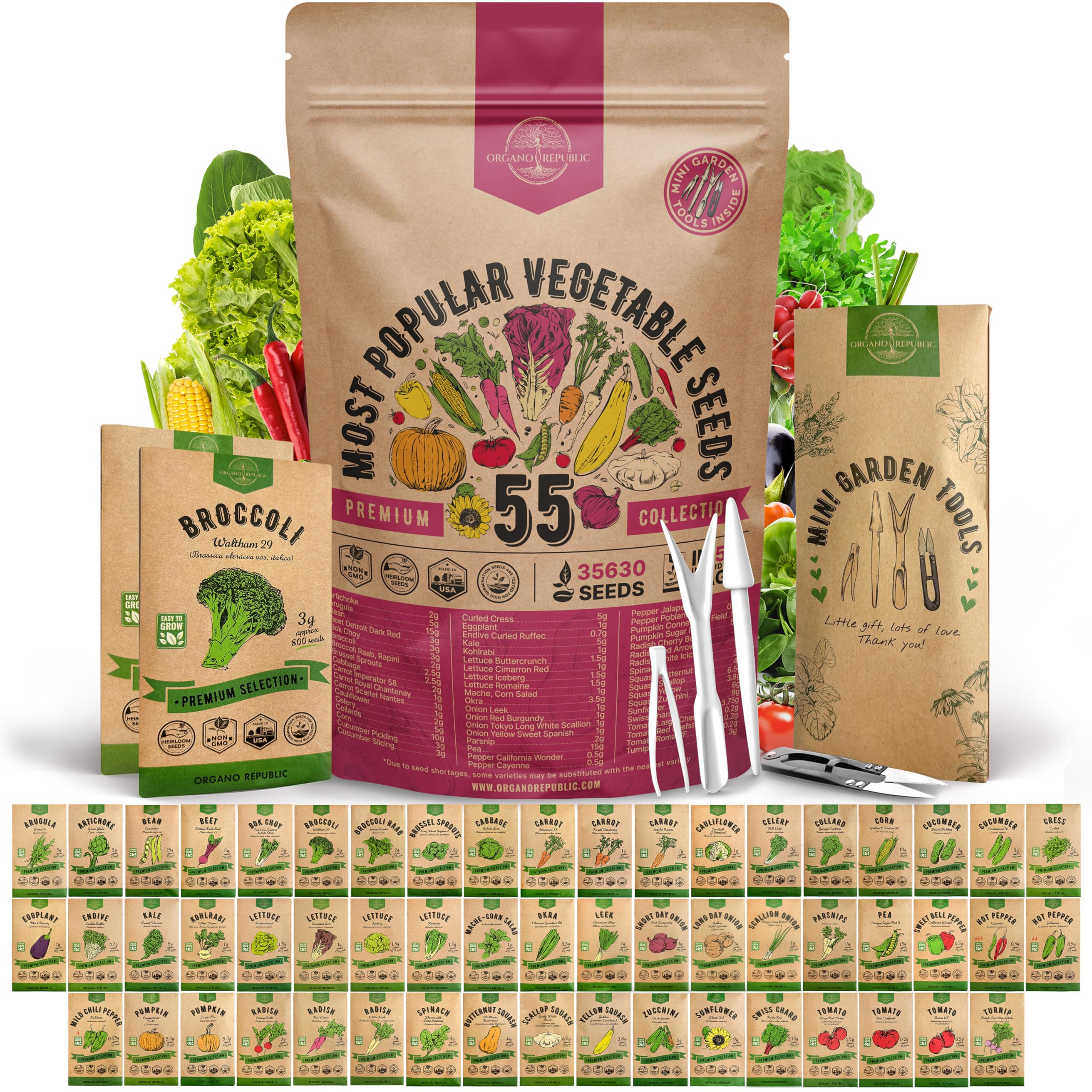
Organo Republic 55-variety vegetable pack
For: Variety for someone who will actually garden this year
What the listing says: 55 vegetable varieties, about 35,600 seeds, labelled for year-round planting windows.
Before you buy: Fifty-five packets is more than a first-year gardener can plant, and the leftover seed ages in the drawer. Buy it if you have the space and will sow in succession; otherwise a smaller kit and the fridge beat it.
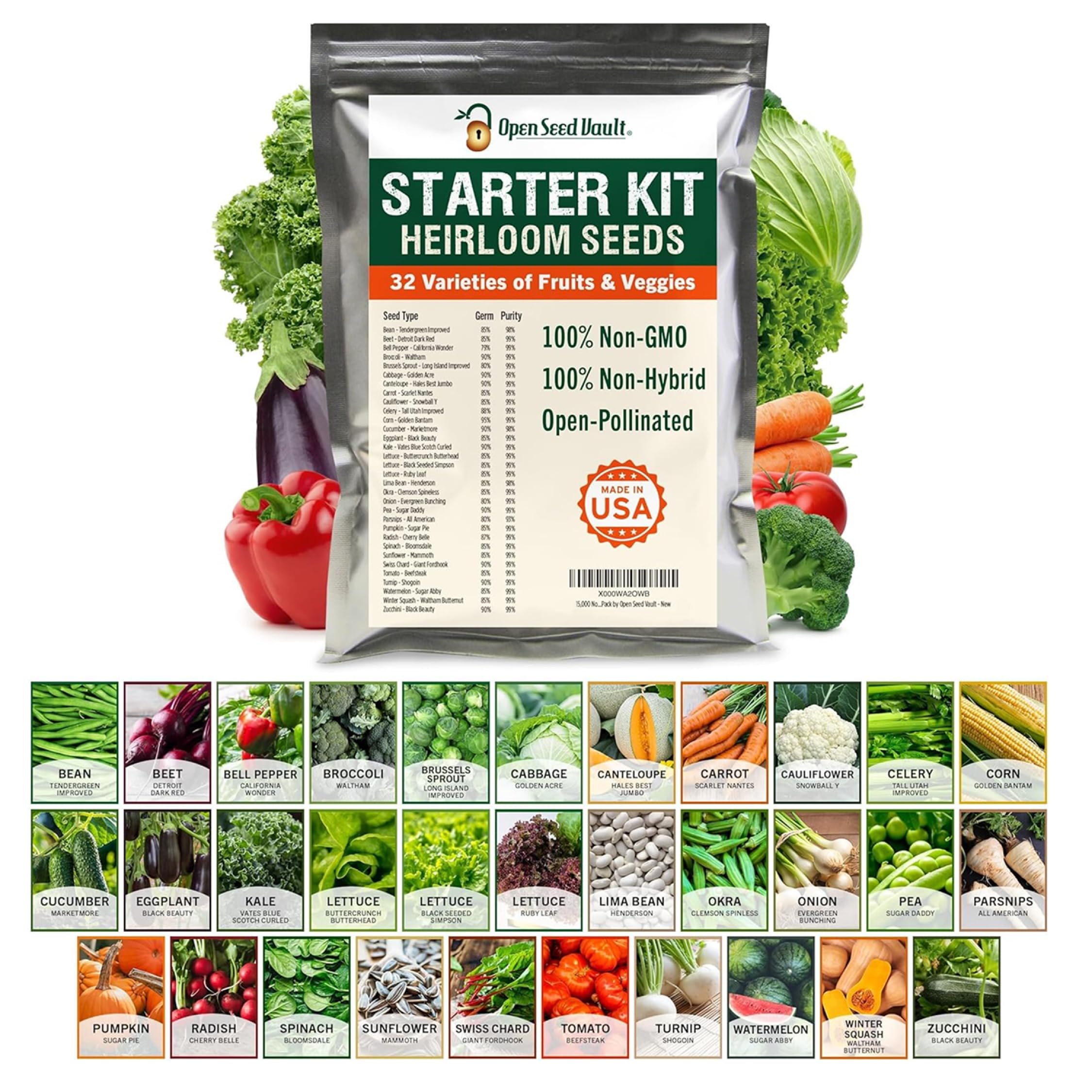
Open Seed Vault, 15,000 heirloom seeds
For: The stored reserve, opened once a year to test
What the listing says: Heirloom vegetable varieties, about 15,000 seeds, sealed for storage, partial-shade tolerance stated.
Before you buy: The word vault suggests it can wait. It cannot: the seal slows moisture, not time. Refrigerate it, test a packet each spring, and replace it on a schedule rather than trusting a date on the pouch.

Black Duck 43-packet vegetable and herb set
For: The budget starter with a storage bag
What the listing says: 43 labelled packets, about 10,000 seeds, Mylar storage bag included.
Before you buy: The Mylar bag is a nice touch but does not replace cold storage. Put the bag in the fridge with a desiccant, and treat the herb packets as the first to sow: they are the ones that decline fastest.

Sereniseed certified organic herb seeds, 10-pack
For: A windowsill, and morale
What the listing says: Ten certified-organic culinary herb varieties.
Before you buy: Herbs are not calories; they are the thing that makes a month of stored rice bearable. Grow them now on a sill so the habit exists before you rely on it.

Seed Needs culinary herb variety pack, 12
For: The same job, two more varieties
What the listing says: Twelve culinary herb varieties, spring sowing, full sun.
Before you buy: Either herb pack is fine; buy one, not both. Pair it with a vegetable kit that has beans and squash, which is where the food is.
What to plant first if the kit has to feed people
In order of calories per square foot for a beginner: potatoes (from seed potatoes, not from any kit here), winter squash, dry beans, sweet corn if you have the space, then the quick greens and roots for variety and vitamins. A kit gives you the second, third and fourth of those; the first you buy separately. Our guides on survival gardening and the prepper pantry cover how the garden and the stored food fit together, and the supply calculator sizes the stored side.
Saving seed from the first harvest
UMN’s guidance for beginners: save from tomatoes, peppers, beans and peas first (self-pollinating, easy to clean and dry); avoid saving from squash, melons and corn until you understand cross-pollination; take seed only from the healthiest plants; label with name, variety and date; store cold, dry and sealed. That is how a one-time kit becomes a permanent one.
FAQ
How long do the seeds in a kit stay viable?
It depends on the crop and the storage, not the packaging. Stored cool and dry many vegetable seeds keep for several years with declining germination; onion and parsnip fade fastest, beans and tomatoes last longer. Refrigerated and dry is the difference between a reserve and a disappointment.
Heirloom, open-pollinated, non-GMO: what matters?
Open-pollinated is the trait that lets you save seed and get the same plant back. Heirloom is a subset of open-pollinated. Non-GMO is marketing on home-garden seed: GMO seed is not sold to home gardeners in the US.
Can I grow a survival garden on a balcony?
You can grow herbs, greens, tomatoes and beans in containers; you cannot grow the calories a family needs. Treat container growing as morale and vitamins, and stored food as the calorie plan.
Preparing with Dan is reader-supported: as an Amazon Associate we earn from qualifying purchases. Product details are as stated on the retailer listings at the time of writing; check the listing before you buy.
Official sources & further reading
The guidance in this article comes from official sources. Consult them directly for the authoritative version:

Dan Lockland is a preparedness instructor and survival skills educator with over 15 years of hands-on experience. He shares practical, no-nonsense guidance on emergency preparedness, self-reliance, and sustainable living at PreparingWithDan.com.