
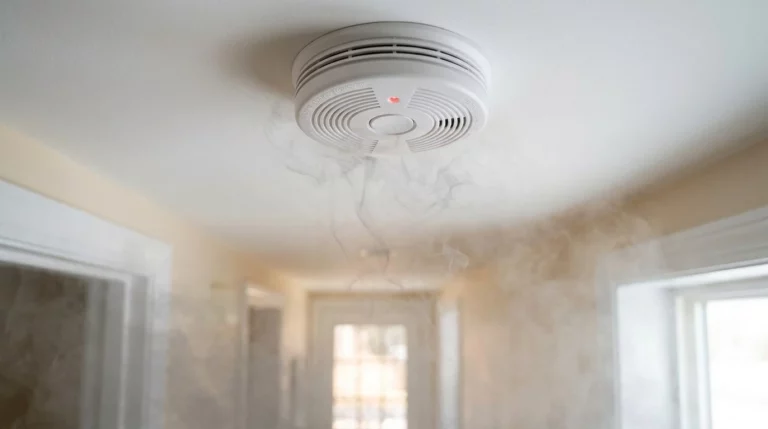
Turn any smoke alarm over and there is a manufacture date; the US Fire Administration’s rule is that the alarm is replaced ten years after it, whatever it looks like from the front. Its second rule is that a home needs both kinds of smoke sensing — ionization and photoelectric, or dual-sensor units — because nobody knows which kind of fire they will get. And the CO sensor is the reason to buy a combination unit at all: Ready.gov’s winter-weather and power-outage pages both ask for carbon monoxide detectors with battery backup, because the outage is when the generator, the camp stove and the propane heater come out.
Six alarms below, all combination smoke and CO, compared on what the listings state — sensor type, power source, interconnection, voice alerts — with the catch for each. No scores, no prices. Placement is the other half: the USFA wants an alarm inside and outside every sleeping area and on every level, interconnected so that when one sounds they all sound.
Four things to read on the listing
- Smoke sensor type. Photoelectric responds faster to smouldering fires, ionization to flaming ones. The USFA asks for both in the home; a photoelectric combination unit next to an ionization-only alarm satisfies that, as does a dual-sensor unit.
- Power. A sealed 10-year battery means no battery changes for the life of the alarm, then the whole unit goes. A 9 V unit needs a new battery yearly (the USFA: a dead battery is the same as no alarm). Hardwired units need an electrician and a backup battery replaced yearly.
- Interconnection. Wired or wireless, so the basement alarm wakes the upstairs bedroom. Renters cannot hardwire; wireless-interconnect battery units solve it.
- Voice or smart alerts. A voice announcing the room is useful at 3 a.m.; a phone notification is useful when nobody is home. Neither replaces the 85 dB horn.
At a glance
| Product | Best for | Sensors / power (listing) |
|---|---|---|
| Kidde 10-year sealed battery combination alarm, voice | The install-and-forget unit for a bedroom hallway | Photoelectric + CO / 10-yr sealed |
| First Alert SCO2B, 9 V battery | The cheapest way to add CO detection to a room | Ionization + CO / 9 V |
| First Alert SMCO410 Z-Wave smart combination alarm | A Ring household that wants alerts on the phone | Smoke + CO / 10-yr sealed / Z-Wave |
| Kidde hardwired combination alarms with AA backup, 3-pack | Replacing a house’s aging hardwired set in one go | Photoelectric + CO / hardwired + AA |
| First Alert SMICO100 hardwired interconnect alarm | Fewer nuisance alarms on a wired system | Smoke + CO / hardwired + 9 V |
| First Alert SC5 hardwired smart combination alarm | A wired home that wants app alerts too | Smoke + CO / hardwired / app |
Battery-only: renters, and anywhere without wiring
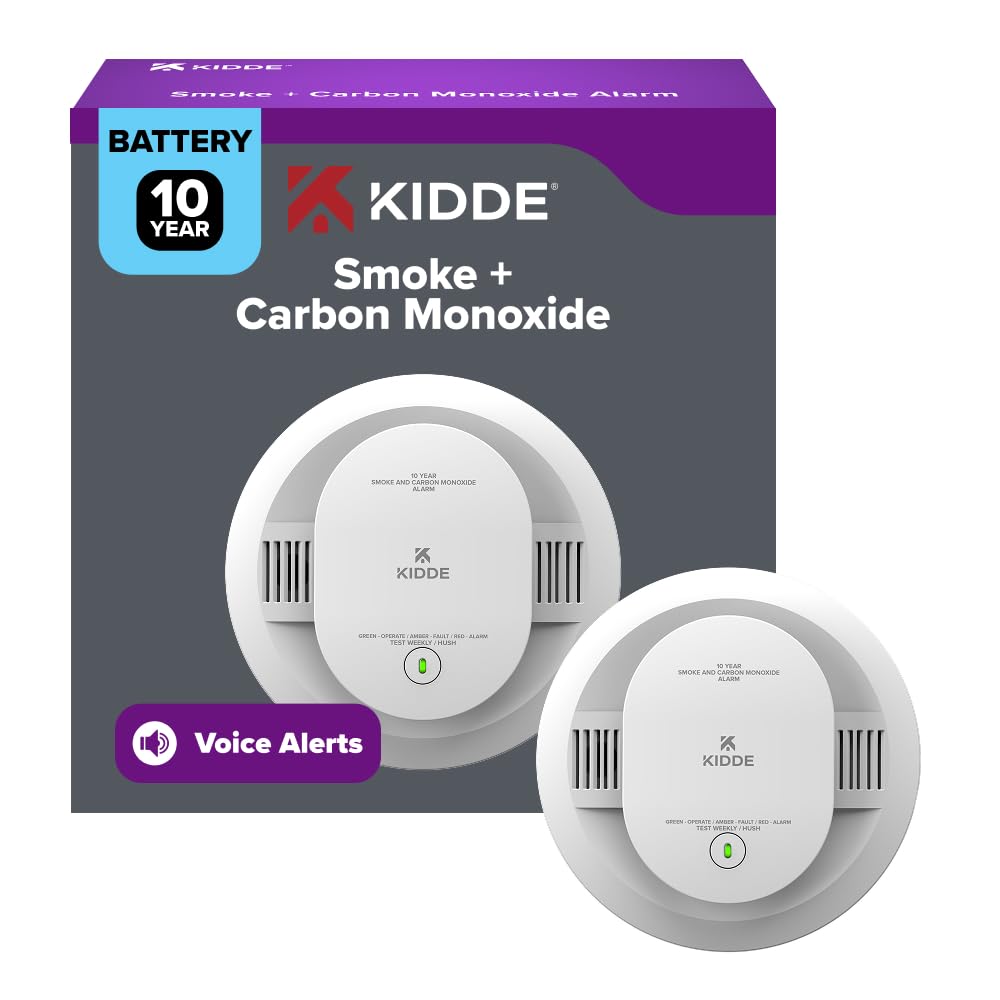
Kidde 10-year sealed battery combination alarm, voice
For: The install-and-forget unit for a bedroom hallway
What the listing says: Photoelectric smoke and electrochemical CO sensors, sealed 10-year battery, voice alerts, 85 dB alarm, red LED indicator.
Before you buy: Photoelectric only: pair it with an ionization or dual-sensor unit elsewhere to meet the USFA’s both-types rule. Write the install date on the side; ten years passes quietly.

First Alert SCO2B, 9 V battery
For: The cheapest way to add CO detection to a room
What the listing says: Ionization smoke chamber and electrochemical CO sensor, 9 V battery, silence and test button, latching indicator, mounting bracket.
Before you buy: Ionization units are the ones that chirp at toast; mount it away from the kitchen. The 9 V battery is a yearly chore the sealed units do not have, and the USFA’s point stands: a chirping alarm with the battery pulled is no alarm.
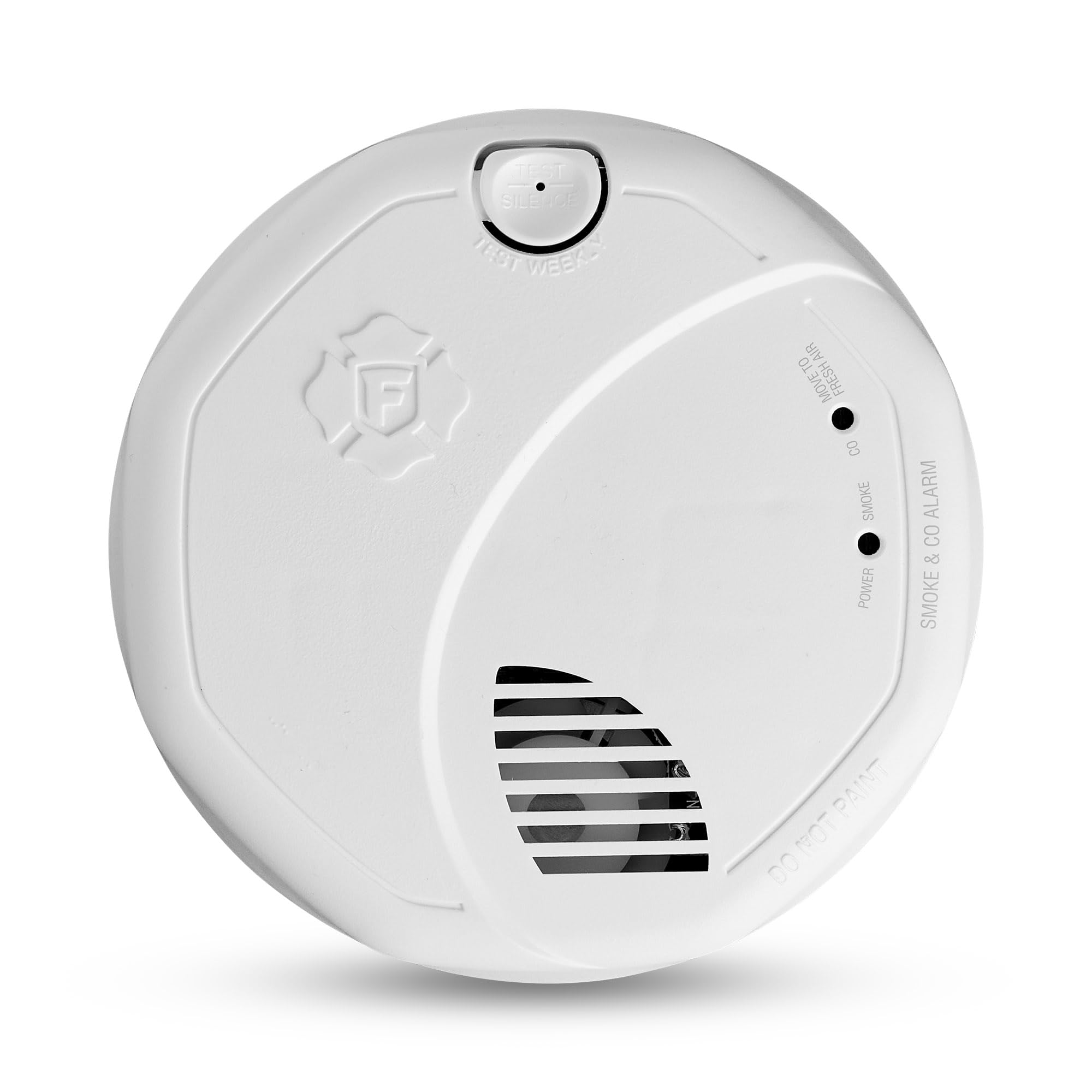
First Alert SMCO410 Z-Wave smart combination alarm
For: A Ring household that wants alerts on the phone
What the listing says: Combination smoke and CO alarm with sealed 10-year battery, Z-Wave Plus, pairs with a Ring base station for remote notifications.
Before you buy: The notification depends on the base station, the internet and the power — three things a house fire and a blackout remove. Buy it for the phone alert when you are away; the horn is what protects the people asleep.
Hardwired with battery backup: whole-home systems
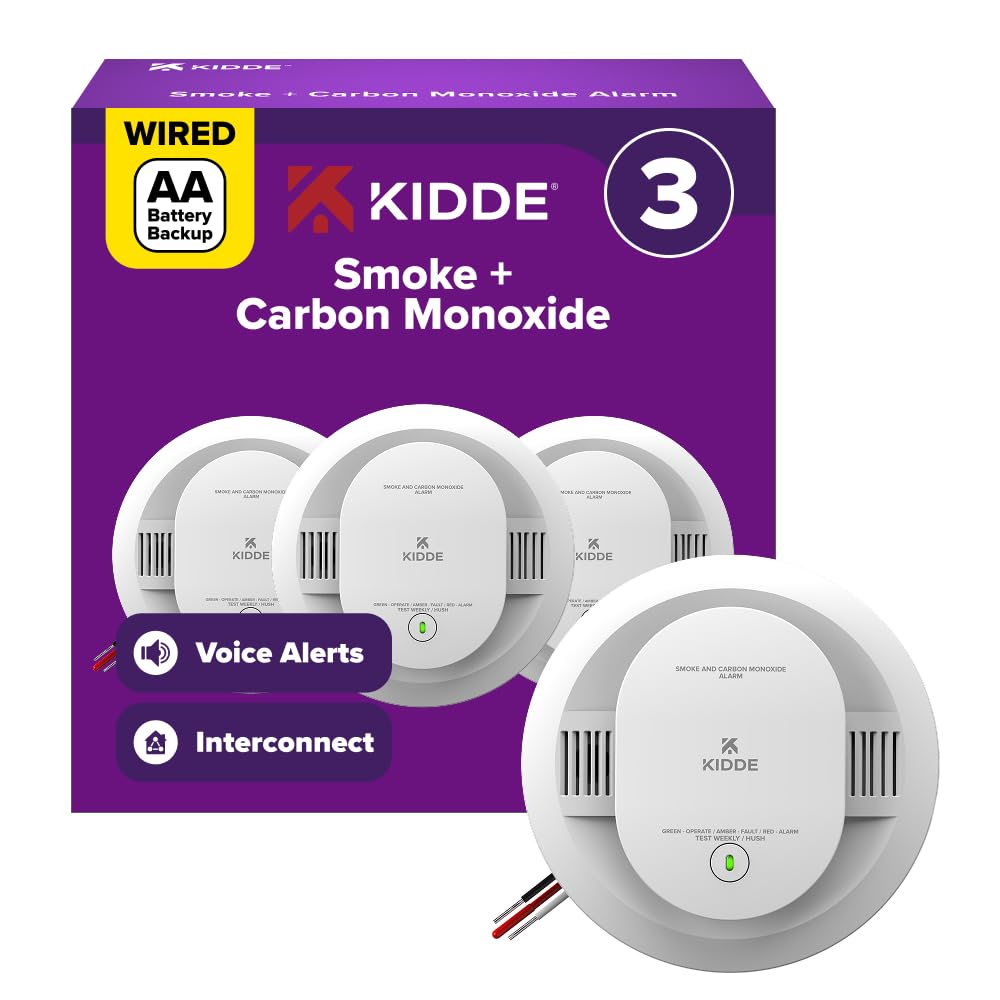
Kidde hardwired combination alarms with AA backup, 3-pack
For: Replacing a house’s aging hardwired set in one go
What the listing says: Photoelectric smoke and electrochemical CO sensors, hardwired with AA battery backup, voice alerts, 85 dB, interconnect capable, 10-year warranty.
Before you buy: Hardwired means an electrician unless you are confident on a live circuit, and the backup AAs are a yearly change. Check the existing wiring harness matches; adapters exist for most brands.

First Alert SMICO100 hardwired interconnect alarm
For: Fewer nuisance alarms on a wired system
What the listing says: Hardwired 2-in-1 smoke and CO alarm with the maker’s Precision Detection sensing and 9 V battery backup, designed for interconnection.
Before you buy: The listing describes the sensing by brand name rather than by type; ask the maker which it is before assuming it covers both fire types. A quieter alarm is only better if it still sounds for a slow, smoky fire.

First Alert SC5 hardwired smart combination alarm
For: A wired home that wants app alerts too
What the listing says: Hardwired smart smoke and CO alarm with battery backup and connected alerts.
Before you buy: Same caveat as every connected alarm: the app is a convenience layered on a horn, not a replacement for it, and the listing does not spell out the smoke sensor type. Confirm before buying for a whole house.
Where they go
- Smoke: inside every bedroom, outside every sleeping area, on every level including the basement; on the ceiling or high on the wall; interconnected.
- Carbon monoxide: on every level and outside sleeping areas, and specifically in whatever room a fuel-burning appliance runs during an outage. Ready.gov’s outage rule keeps generators, camp stoves and grills outdoors and 20 feet from windows; the CO alarm is for the mistakes.
- Not in the kitchen, the bathroom or within a few feet of a heating vent, where steam and normal cooking trip them and tempt someone to pull the battery.
The monthly test, and what to do when it sounds
Test every alarm monthly with the button; replace 9 V and backup batteries yearly; replace every unit ten years from its manufacture date. If a CO alarm sounds, get everyone outside into fresh air and call 911 from there — do not go looking for the source. If a smoke alarm sounds while cooking, open a window and press hush; never remove the battery. Our family plan includes the escape drill, and the extinguisher review covers the next layer.
FAQ
Do I need both ionization and photoelectric smoke alarms?
The US Fire Administration recommends both types, or dual-sensor alarms, in every home, because they detect different fires. Most combination smoke-and-CO units are photoelectric; check the listing and add the other type elsewhere.
How often are alarms replaced?
Ten years from the manufacture date printed on the back, for smoke alarms of every power type; CO sensors have their own stated life, often shorter. Batteries yearly on 9 V units; monthly test on all of them.
Where does a carbon monoxide alarm go during a power outage?
In the room where anything burns fuel, and outside the bedrooms. The safest answer is that nothing burns fuel indoors: generators, grills and camp stoves stay outside, 20 feet from windows, per Ready.gov.
Preparing with Dan is reader-supported: as an Amazon Associate we earn from qualifying purchases. Product details are as stated on the retailer listings at the time of writing; check the listing before you buy.
Official sources & further reading
The guidance in this article comes from official sources. Consult them directly for the authoritative version:

Dan Lockland is a preparedness instructor and survival skills educator with over 15 years of hands-on experience. He shares practical, no-nonsense guidance on emergency preparedness, self-reliance, and sustainable living at PreparingWithDan.com.