
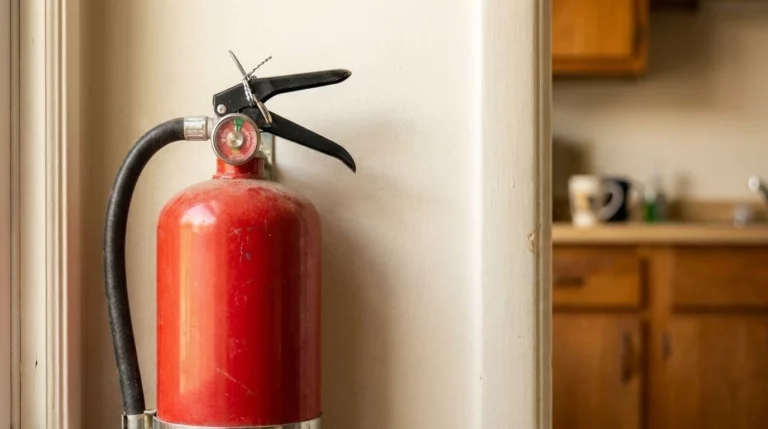
The label on a home fire extinguisher is readable once you know the code, and the US Fire Administration spells it out: in 1-A:10-B:C, the 1 means the equivalent of 1.25 gallons of water on an ordinary-materials fire, the 10 means a flammable-liquid fire of up to 10 square feet, and the C means safe on live electrical equipment. A 3-A unit has three times the Class A capacity of a 1-A unit. The USFA’s two other rules decide the purchase: look for the UL Listed mark, and choose the largest extinguisher you can comfortably operate.
Six extinguishers below, compared on the rating printed on them, the weight, and whether the listing shows a UL listing, with the catch for each. No scores, no prices. An extinguisher is the second line of home fire safety; the first is a working smoke alarm and an escape plan, and our guide on fortifying your home covers where they go.
Before you buy: the USFA checklist for using one at all
The US Fire Administration’s test for whether to fight a fire is seven questions, all of which must be yes: has everyone been alerted; has someone called the fire department; am I physically able; is the fire small and contained to one object or surface; am I safe from the smoke; do I have a clear escape route. Young children and older adults should not use extinguishers. If any answer is no: leave, close the door, call 911 from outside. The extinguisher is for the pan and the wastebasket, not the room.
Reading the classes
- A ordinary materials (wood, cloth, paper). B flammable liquids (grease, gasoline, oil-based paint). C energised electrical equipment. K cooking oils and fats in appliances — the commercial-kitchen class; at home, a lid and turning off the burner is the first response to a pan fire, and an ABC unit is the usual backup.
- Dry chemical ABC is the standard home agent: cheap, effective, and it makes a corrosive mess that must be cleaned off electronics quickly.
- Rechargeable vs disposable. A disposable unit is replaced after any use or when the gauge drops; a rechargeable one (metal valve) is serviced by a fire-equipment company. For a 2.5 lb unit the difference rarely matters; for a 5 lb one it does.
At a glance
| Product | Best for | Rating / size / UL (listing) |
|---|---|---|
| Kidde 1-A:10-B:C multipurpose, 6-pack | One per floor, the kitchen, the garage and the car | 1-A:10-B:C / 2.5 lb / UL |
| Amerex B402, 5 lb ABC, rechargeable | The garage, the workshop, the largest unit most adults can handle | 3-A:40-B:C / 5 lb / UL |
| OPAKIT 5 lb ABC, 2-pack | Two larger units for a house with a garage | 2-A:10-B:C / 5 lb / not stated |
| Jasvelly 2.5 lb ABC, 2-pack | A kitchen and an entryway in an apartment | 1-A:10-B:C / 2.5 lb / not stated |
| Safewayfire 2.5 lb ABC | A single unit for a small apartment | 1-A:10-B:C / 2.5 lb / not stated |
| AmzBoom compact water-based A-B-C-K | A grill, a car, a very small kitchen | A-B-C-K claimed / compact / not stated |
UL listing shown on the listing
Both state the UL listing the USFA tells you to look for.

Kidde 1-A:10-B:C multipurpose, 6-pack
For: One per floor, the kitchen, the garage and the car
What the listing says: Six 2.5 lb dry-chemical ABC units in aluminium canisters with pressure gauge, mounting bracket, PASS instructions; UL listed.
Before you buy: A 2.5 lb unit discharges in seconds: it is a one-pan, one-bin extinguisher. Six of them placed well beats one big one you cannot reach. Mount them by the exit of the room, not next to the stove.

Amerex B402, 5 lb ABC, rechargeable
For: The garage, the workshop, the largest unit most adults can handle
What the listing says: 5 lb dry-chemical ABC with UL 3-A:40-B:C rating, metal valve and hose, wall bracket; rechargeable.
Before you buy: Three times the Class A capacity and four times the Class B of the 2.5 lb units, at twice the weight. This is the USFA’s “largest you can comfortably operate” for most adults; check that the household’s smaller members can lift and aim it.
UL listing not stated on the listing
Not disqualifying, but the USFA’s rule is to look for the mark: check the cylinder label in the photos or ask the seller before buying.
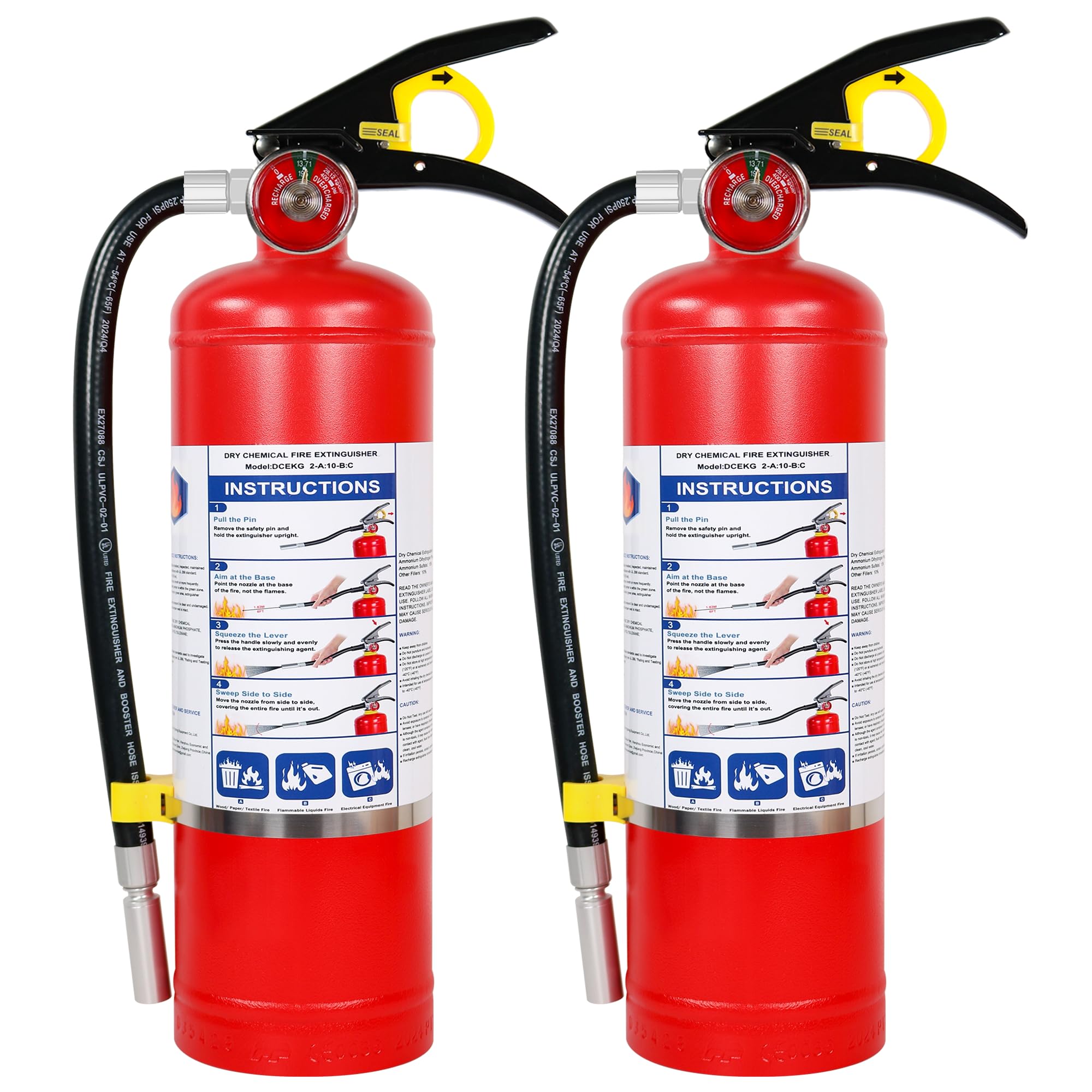
OPAKIT 5 lb ABC, 2-pack
For: Two larger units for a house with a garage
What the listing says: Two 5 lb dry-chemical ABC units rated 2-A:10-B:C, quick-release handles, mounts included.
Before you buy: A 5 lb unit rated 2-A:10-B:C has less Class B capacity than the 5 lb Amerex at 40-B; the weight is not the rating. Confirm the UL mark on the cylinder before relying on it.
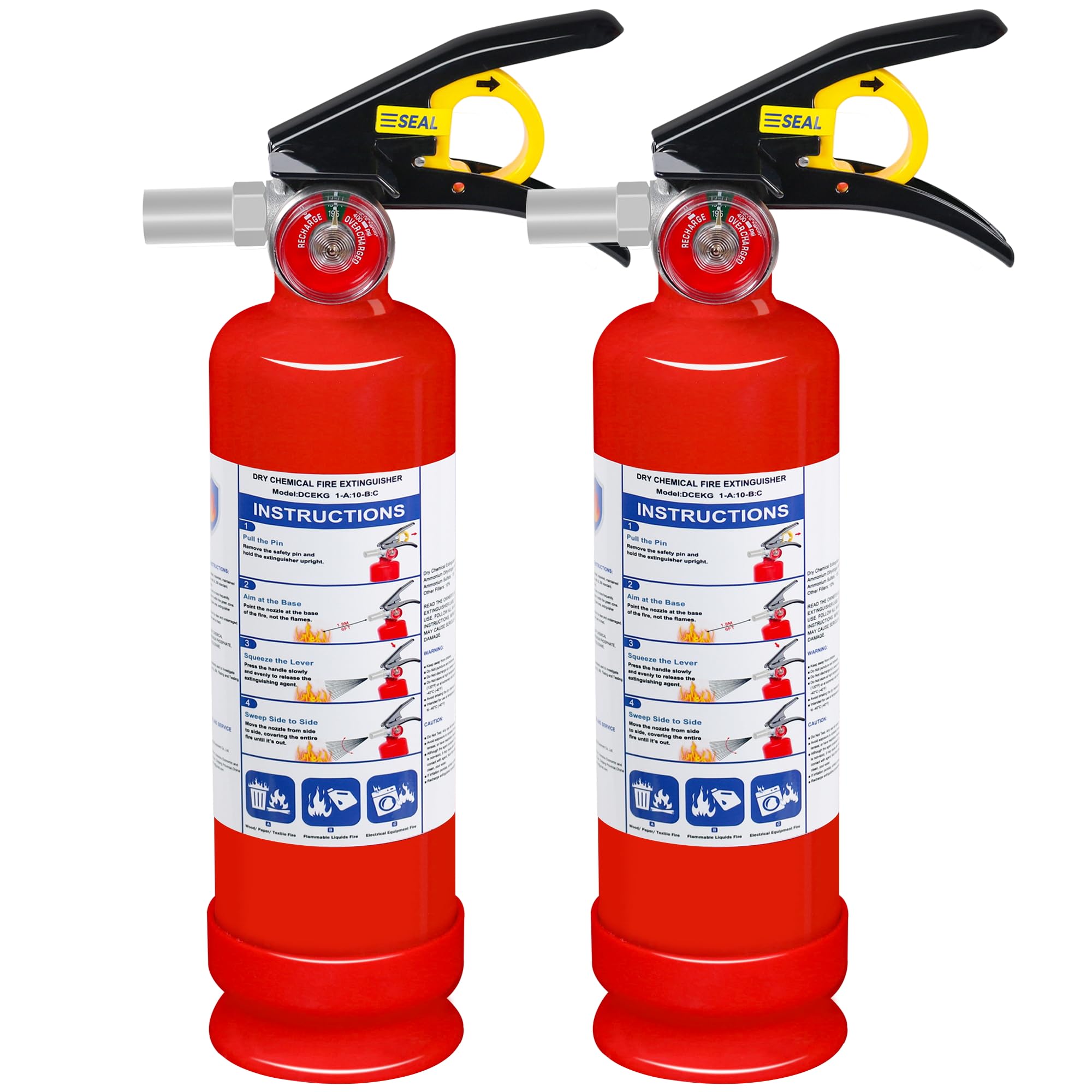
Jasvelly 2.5 lb ABC, 2-pack
For: A kitchen and an entryway in an apartment
What the listing says: Two 2.5 lb dry-chemical ABC units, 1-A:10-B:C, quick-release handles, mounting hardware.
Before you buy: Same rating as the Kidde; the difference is the certification shown. If the cylinder label in the photos carries the UL mark, it is an equivalent unit; if not, the Kidde pack is the safer buy.
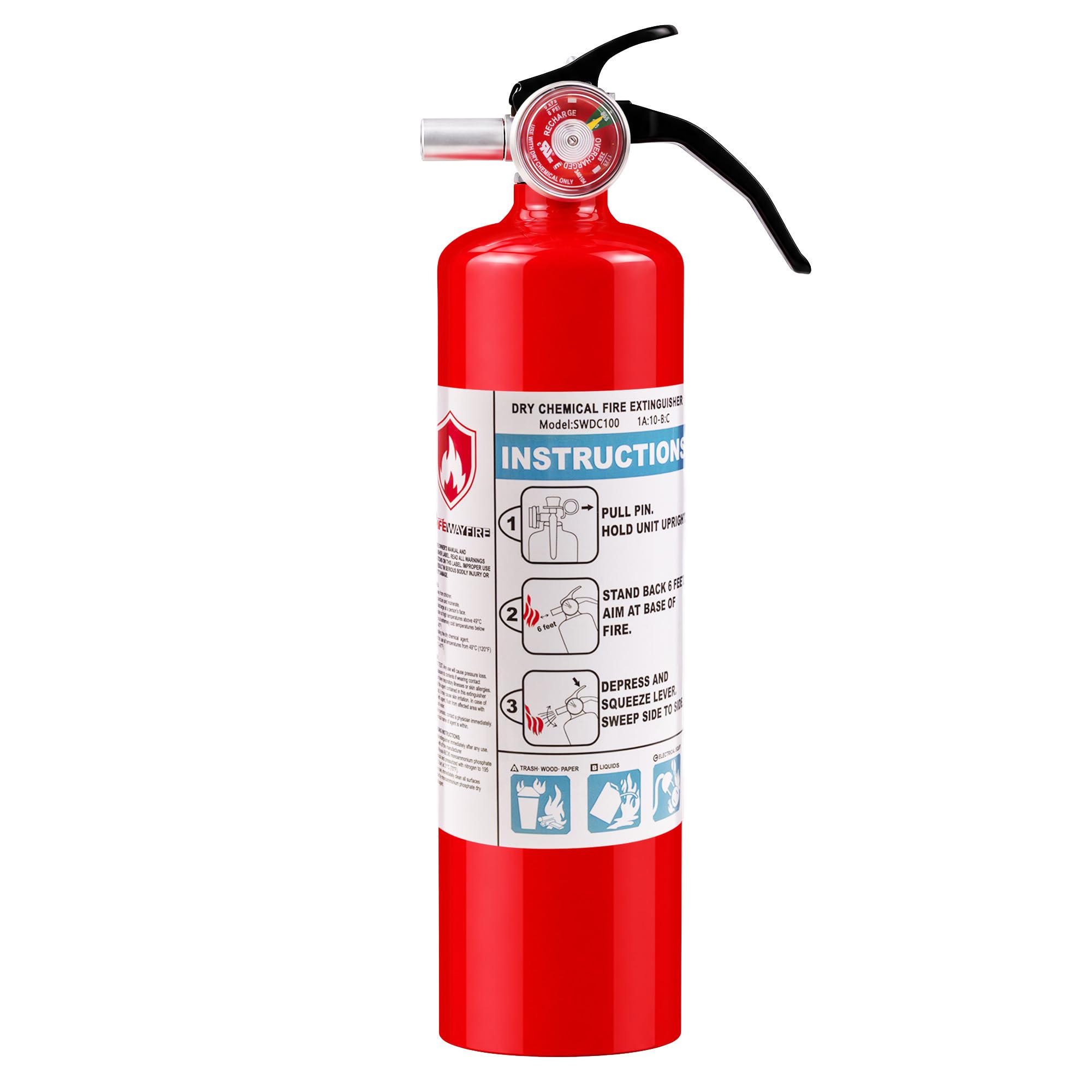
Safewayfire 2.5 lb ABC
For: A single unit for a small apartment
What the listing says: 2.5 lb dry-powder ABC, carbon-steel cylinder, aluminium valve, hand-operated, 5-year stated service life.
Before you buy: A single 2.5 lb unit is the minimum for a studio; a one-bedroom wants two. Note the stated five-year service life: write the purchase date on the cylinder.
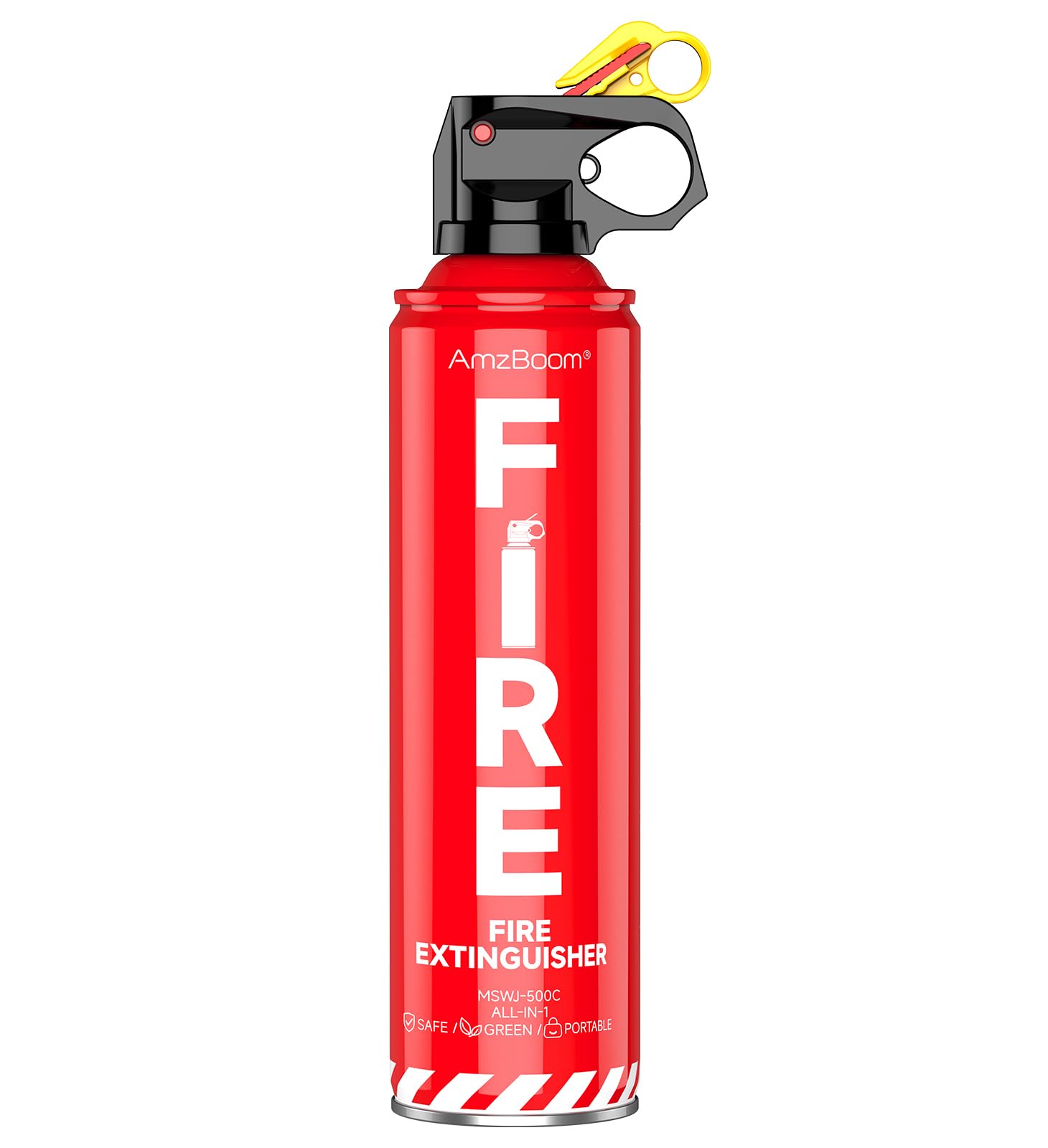
AmzBoom compact water-based A-B-C-K
For: A grill, a car, a very small kitchen
What the listing says: Compact water-based extinguisher marketed for Class A, B, C and K, with mounting hardware and a 6-year warranty.
Before you buy: A water-based agent on Class C and K is a specific chemistry; the listing gives no UL rating numbers, and the USFA’s advice is to look for the mark. Treat this as a supplement for the grill, not the kitchen’s primary unit.
Where they go, and the monthly check
- Kitchen: mounted near the exit of the room, within reach but not above or behind the stove.
- Each floor, the garage or workshop, and the car. Bedrooms get the smoke alarm and the escape route, not the extinguisher.
- Monthly: gauge in the green, pin and seal intact, nothing blocking it, no dents or corrosion; some dry-chemical units want a shake to keep the powder loose. After any use, even a second, the unit is recharged or replaced.
- Teach PASS to every adult in the house: Pull the pin, Aim low at the base, Squeeze slowly, Sweep side to side. The fire department will train you if you ask.
The extinguisher is one layer. The alarms are the layer that wakes you; our review of outage lighting covers the other reason kitchens burn during blackouts, and the family plan has the fire escape drill.
FAQ
Which fire extinguisher is best for a home?
A UL-listed multipurpose ABC dry-chemical unit, per the US Fire Administration, in the largest size the user can handle: 2.5 lb for kitchens and cars, 5 lb for garages and workshops.
Do I need a Class K extinguisher at home?
Class K is designed for commercial cooking appliances. At home, the first response to a pan fire is a lid and the burner off; an ABC unit is the backup. If you deep-fry regularly, a small K unit is a reasonable addition.
How long does a fire extinguisher last?
Disposable units are typically rated for a period stated on the label and replaced after that or after any use; rechargeable units are inspected and serviced periodically. Check the gauge monthly and the label’s date once a year.
Preparing with Dan is reader-supported: as an Amazon Associate we earn from qualifying purchases. Product details are as stated on the retailer listings at the time of writing; check the listing before you buy.
Official sources & further reading
The guidance in this article comes from official sources. Consult them directly for the authoritative version:

Dan Lockland is a preparedness instructor and survival skills educator with over 15 years of hands-on experience. He shares practical, no-nonsense guidance on emergency preparedness, self-reliance, and sustainable living at PreparingWithDan.com.