
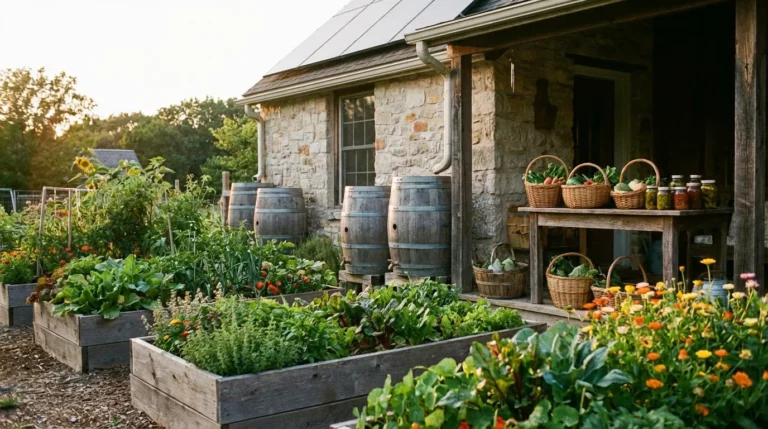
Sustainable living and emergency preparedness are the same set of skills viewed from different angles. Growing food, conserving water, reducing grid dependence, and building repair skills make your family more resilient regardless of whether the disruption is a hurricane or a long-term shift in cost of living. This guide builds a sustainable living plan that your family can actually stick to — practical changes, in priority order, with real numbers.
Table of Contents
- Why Sustainability and Preparedness Overlap
- Step 1 — Reduce Your Energy Dependence
- Step 2 — Grow Some of Your Own Food
- Step 3 — Reduce and Conserve Water
- Step 4 — Reduce Waste and Repair More
- Step 5 — Build Skills, Not Just Stuff
- Involving Kids: Making It Stick
- Annual Sustainability Calendar
- Common Mistakes
- FAQ
Why Sustainability and Preparedness Overlap
The skills of sustainable living directly strengthen emergency preparedness:
| Sustainable skill | Preparedness benefit |
|---|---|
| Growing food | Food supply resilience when stores run out or prices spike |
| Water conservation + collection | Water supply independence during outages or supply disruption |
| Solar panels or battery backup | Power independence during blackouts |
| Food preservation (canning, dehydrating) | Long-term food storage capability |
| Repair skills (sewing, carpentry, plumbing basics) | Self-sufficiency when services are unavailable |
| Reduced consumption | Lower ongoing costs = more budget for preparedness investment |
Every step toward more sustainable living is simultaneously a step toward greater resilience. This isn’t a lifestyle identity — it’s a practical strategy for reducing your family’s dependence on systems that can fail.
Step 1 — Reduce Your Energy Dependence
Energy is the biggest monthly household expense category that has the most room for reduction with no lifestyle sacrifice. The hierarchy of actions by return-on-effort:
Immediate (under $50, this week)
- Programmable thermostat: $25–$50, saves 10% annually on heating/cooling
- LED bulbs throughout the home: LED uses 75% less energy than incandescent, lasts 10–25× longer. A full home swap costs $50–$100 and saves $150–$200/year
- Seal air leaks: Weather stripping under doors ($8–$15/door) and foam gaskets behind electrical outlets ($5 for a pack of 20) can reduce heating costs by 5–10%
- Unplug phantom loads: Electronics on standby consume 5–10% of household electricity. Smart power strips ($25–$35) cut phantom loads on TV/entertainment systems automatically
Medium-term (under $500, this quarter)
- Attic insulation: If your attic has less than R-38 insulation (about 12″), adding blown-in insulation is the highest-ROI energy improvement for most homes. Average cost: $1,500–$3,000; average savings: $400–$600/year
- Portable solar + battery backup: A 200W solar panel ($150) + 100Ah LiFePO4 battery ($200) powers lights, phone charging, and a NOAA radio indefinitely — pure sustainability investment that doubles as blackout prep. Total: ~$350
- Water heater insulation blanket: $25, reduces standby heat loss by 25–45% — most effective on older electric water heaters
Long-term (over $500)
- Solar panels (rooftop): Average family saves $1,000–$2,000/year; payback period 6–12 years; significant emergency prep benefit (maintain power during grid outages with battery backup)
- Heat pump water heater: 2–3× more efficient than electric resistance; $1,200–$2,000 installed; federal tax credit of 30% currently available
- Attic insulation + air sealing (professional): Often the highest-ROI measure for older homes before solar investment
Step 2 — Grow Some of Your Own Food
The goal isn’t food self-sufficiency — that’s not realistic for most families. The goal is reducing your grocery bill, eating fresher food, and building gardening skills that matter in an extended supply disruption.
What’s worth growing for most families:
| Crop | Why worth growing | Skill level | Space needed |
|---|---|---|---|
| Tomatoes | Highest value per sq ft; fresh taste incomparable to store | Beginner | 1 plant per 4 sq ft; 5–8 per family |
| Leafy greens (lettuce, spinach, kale) | Fast growing; expensive at store; continuous harvest | Beginner | 4–6 sq ft |
| Zucchini / summer squash | Extremely prolific; 2 plants feed a family all summer | Beginner | 8–10 sq ft per plant |
| Herbs (basil, rosemary, thyme, chives) | $3–$5/bunch at store; grows indefinitely | Beginner | 1–2 sq ft per herb |
| Green beans | High calorie yield; easy to preserve; pole types very productive | Beginner–Intermediate | 4 sq ft for 10 plants |
| Sweet potatoes | High calorie, long storage life, low maintenance | Intermediate | 100 sq ft for a meaningful yield |
| Dried beans (pinto, black) | Long storage life; calorie-dense; key to food security | Intermediate | 50–100 sq ft for family supply |
A 200 sq ft garden can produce 300–400 lbs of vegetables per season — roughly $800–$1,200 in store value for a family of 4, at a seed cost of $30–$50. Start with 100 sq ft and 3–4 crops the first year. Don’t try to grow everything.
Step 3 — Reduce and Conserve Water
The average American household uses 80–100 gallons per person per day. Most families can reduce this by 20–30% with simple changes, and build meaningful water independence through storage and collection.
Reduction measures (immediate)
- Low-flow showerheads: $15–$25; reduce shower water use by 40% without noticeable pressure change
- Toilet tank displacement: A filled water bottle in the tank reduces water per flush by 0.5–1 gallon — free
- Fix leaks: A running toilet wastes 200 gallons/day. A dripping faucet wastes 20 gallons/day. Fixing both costs $10–$30 in parts
- Full loads only: Running dishwasher and laundry only when full reduces water use by 30–50% in those appliances
Storage and collection (emergency prep overlap)
- 55-gallon rain barrel: $80–$120; connects to downspout; typical roof collects 600 gallons per inch of rain. 1″ of rain on a 1,500 sq ft roof = 900 gallons of runoff. Most of that is drinkable with minimal treatment
- WaterBOB emergency bladder: $30; fits in a bathtub; stores 100 gallons of tap water during an emergency warning. Best value emergency water storage available
- 7-gallon water containers × 4: $12–$15 each; the minimum household water storage standard for a 7-day emergency supply for a family of 4
Step 4 — Reduce Waste and Repair More
The most sustainable object is one you already own and repair, rather than dispose and replace. For a family of 4, this is also the fastest route to freeing up $500–$1,500/year for preparedness investment.
- Composting: A kitchen compost bin ($25–$40) converts food scraps into garden fertilizer, eliminating $15–$30/month in bagged fertilizer costs and reducing household waste by 20–30%
- Repair before replace: Basic skills in sewing (clothing repair), basic plumbing (fixture replacement), and simple carpentry (furniture repair) prevent unnecessary replacement purchases. YouTube has eliminated almost every skill barrier here
- Buy second-hand for large items: Furniture, tools, outdoor equipment, and children’s gear at 20–40% of retail — Facebook Marketplace, Craigslist, and thrift stores
- Reduce single-use items: Reusable bags, glass/stainless containers, cloth napkins, and reusable water bottles eliminate ongoing consumable costs. A family switching to reusable water bottles saves $600–$1,200/year (eliminating a daily $2 bottled water habit)
Step 5 — Build Skills, Not Just Stuff
Sustainable living is a skill set as much as a purchase list. Five skills that directly reduce costs AND build emergency resilience:
- Food preservation: Canning, dehydrating, and fermenting converts garden surplus into year-round food supply. A water bath canner ($30) and 24 Mason jars ($25) is all you need to start canning tomatoes, jams, and pickles. Also allows you to build the long-term food storage that’s otherwise expensive when buying freeze-dried
- Basic first aid: Stop the Bleed training (free) + a $50–$80 first aid kit + CPR certification ($50). Reduces dependence on urgent care for minor injuries and expands your capability to handle family health needs without professional care in an extended emergency
- Clothing repair: A basic sewing kit ($15) and 2 hours of practice covers 90% of clothing repairs (buttons, seams, patches). Extends clothing life by 2–3×
- Small appliance repair: YouTube-guided repair of common appliances (washing machines, dishwashers, small engines) is accessible to most adults with basic mechanical aptitude. A $50 repair vs. a $500 replacement is a compelling return on one afternoon of learning
- Seed saving: Saving seeds from open-pollinated vegetable varieties eliminates annual seed costs and ensures continuous garden capability regardless of supply chain disruptions. Learn for tomatoes, peppers, and beans first — the easiest seeds to save
Involving Kids: Making It Stick
Sustainable habits stick when kids own a piece of them. Specific approaches that work:
- Give kids their own garden bed: 4×4 feet, their choice of what to grow. When they grow it, they eat it — this has been shown consistently across studies on children and vegetable consumption
- Make energy use visible: Show your energy bill together. A $200 electricity bill that drops to $150 after LED switches is tangible cause-and-effect. Kids who understand costs make better decisions
- Assign composting: Kids aged 6+ can manage a compost bin. It’s a science lesson, a responsibility, and a visible cycle — kitchen scraps become garden soil that grows food
- Teach repair as a skill, not a chore: Sewing on a button, fixing a bicycle chain, and troubleshooting a power strip together are bonding activities that teach practical life skills. Frame it as capability-building, not budget management
- Involve kids in emergency prep drills: Children who’ve practiced going to Meeting Point 1, who know where the emergency kit is, and who understand why the garden and water storage exist feel safer and more competent — not scared. Age-appropriate inclusion builds confidence
Annual Sustainability Calendar
| Season/Month | Sustainability action | Prep crossover |
|---|---|---|
| January–February | Order seeds; audit food storage; check insulation and weatherstripping | Rotate stored food; check emergency kit |
| March–April | Start seeds indoors; prepare garden beds; check solar/battery equipment | Test NOAA radio; charge power banks |
| May–June | Plant warm-season crops; set up rain barrel; compost actively | Fill water storage containers; check hurricane/severe weather season prep |
| July–August | Harvest and preserve; dehydrate excess; review energy use on summer cooling | High season for hurricanes, wildfires; review evacuation routes |
| September–October | Final harvest; begin canning/preserving for winter; save seeds; plant fall crops | Add preserved food to long-term storage; replenish emergency kit items |
| November–December | Audit stored food against plan; weatherize home; plan next year’s garden | Change smoke detector and CO detector batteries; emergency plan family review |
Common Mistakes When Building a Family Sustainable Living Plan
- Starting with the expensive stuff. Solar panels and rain catchment systems make sense after the basics — LED bulbs, thermostat, draft sealing — are already done. The cheap measures have faster payback and larger cumulative impact. A $50 LED swap pays back in 6 months; a $20,000 solar installation pays back in 8–12 years.
- Trying to change everything at once. A family that attempts zero-waste, veganism, a full garden, and solar installation simultaneously will burn out within 3 months. Pick one category per quarter. Sustainable living is a multi-year transition, not a weekend project.
- Buying “sustainable” products without reducing consumption first. Buying eco-certified paper towels instead of cloth rags is a marginal improvement. Eliminating paper towels entirely saves $200/year and produces no waste. Reduction beats substitution every time.
- Separating sustainability from prep. Families who approach these as separate systems (“sustainability is for climate; prep is for emergencies”) double their effort and miss the crossover value. A rain barrel, a food garden, and a solar battery are all three things simultaneously: sustainable, financially sound, and emergency-resilient.
- No kids buy-in. A sustainable living plan that parents enforce on reluctant children creates resentment and backsliding. The garden bed, the compost bin, and the energy bill review become positive when kids have agency. Give them ownership over a piece of the plan.
FAQ
How do I start a family sustainable living plan without spending a lot of money?
Start with the free and near-free measures: seal drafts under doors (weather stripping, $8–$15/door), unplug electronics when not in use, switch to full loads in laundry and dishwasher, and start composting kitchen scraps. These cost under $50 total and can save $300–$500/year. Then reinvest those savings into LED bulbs and a programmable thermostat.
How much food can a family of 4 realistically grow at home?
A well-maintained 200 sq ft garden in a reasonable growing zone produces 300–400 lbs of vegetables per year — roughly 15–20% of a family’s vegetable needs. That’s worth $800–$1,200 at retail for a seed investment of $30–$50. Realistic expectation: supplement your grocery shopping, not replace it. The skills built are worth more than the produce yield.
How does sustainable living connect to emergency preparedness?
Every sustainable practice reduces dependence on systems that fail in emergencies. A family that grows food has a backup supply. A family with solar + battery backup maintains power during blackouts. A family with water storage and rain collection isn’t dependent on municipal systems. A family that knows how to preserve food and repair things is more self-sufficient regardless of the emergency type.
What’s the best first sustainable investment for a family?
LED bulbs if you haven’t switched yet ($50 for a full home swap, saves $150–$200/year). A programmable thermostat ($25–$50, saves 10% on energy). These two pay for themselves in 3–6 months and require no behavioral change. After those, a backyard compost bin ($25–$40) starts converting food waste to garden value. All three together cost under $150 and save $400–$600/year.
How do I get my kids interested in sustainability?
Give them ownership: their own garden bed (their choice of crops), their own compost responsibility, and visible understanding of why it matters (show them the utility bill savings, let them measure what the rain barrel collected). Children who have agency over a sustainability practice adopt it as identity — it stops being something parents make them do and becomes something they take pride in.
Bottom Line
A whole-family sustainable living plan starts with energy reduction (LED + thermostat = $75, saves $350/year), adds a manageable garden (200 sq ft, 4–5 crops), water storage (WaterBOB + rain barrel), and one new repair skill per year. Every step reduces monthly costs, builds resilience, and teaches kids practical capabilities. For the emergency preparedness plan that overlaps with all of this, see How to Build a Custom Family Emergency Plan. For the food storage extension of your garden harvest, see Mastering Long-Term Food Storage for Preppers.
Last Updated: April 2026

Dan Lockland is a preparedness instructor and survival skills educator with over 15 years of hands-on experience. He shares practical, no-nonsense guidance on emergency preparedness, self-reliance, and sustainable living at PreparingWithDan.com.