
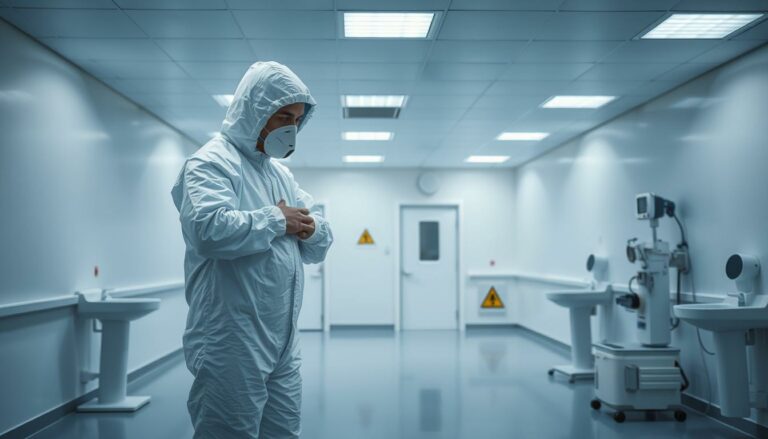
After a radiation incident, quick and effective decontamination is key. It keeps individuals and communities safe. Decontamination reduces health risks from radiation, which can cause short and long-term problems.
Radiation exposure’s effects depend on the dose and how long you’re exposed. Acute Radiation Syndrome (ARS) can happen with high doses. It affects the blood, gut, and brain in different ways. Contaminants like cesium-137 and strontium-90 stay harmful for years. Iodine-131 can hurt the thyroid gland, even with a shorter half-life.
The LNT theory says even small doses of radiation are risky. This means we must act fast and thoroughly clean up after exposure. Evacuations and medical checks, like after the Three Mile Island and Goiânia disasters, are vital.
Creating a good decontamination plan is important. It involves knowing about radiation, using protective gear, and following a cleaning process. This keeps people safe and helps the environment. Also, dealing with the mental effects of radiation is important, so we need strong support systems and mental health services.
Key Takeaways
- Timely decontamination is essential for limiting radiation-related health risks.
- Understanding the effects and types of radiation helps in effective emergency response.
- Use of personal protective equipment ensures safety during the decontamination process.
- Thorough decontamination plans contribute to long-term environmental safety.
- Mental health resources are critical for managing the psychological impact of radiation exposure.
Understanding Radiation Exposure and Its Effects
Radiation is a big part of our lives today. It’s important to know what it is, how we get exposed, and how it affects us. Learning about this helps us stay safe and make smart choices.
What is Radiation?
Radiation is energy that comes out as waves or tiny particles. It can be strong enough to change atoms, or it can be too weak. Things like X-rays and radioactive elements are strong, while sunlight and microwaves are not.
Types of Radiation Exposure
There are different ways we can get exposed to radiation. Knowing these helps us prepare better.
- Accidental exposure: This happens when there’s a big leak at a nuclear site. It can cause big problems and health issues for a long time.
- Occupational exposure: People who work in healthcare or nuclear plants get exposed often. Their safety is very important, and they must follow strict rules.
- Environmental exposure: We all get a little bit of radiation every day from things like radon gas. It’s usually not a big deal, but it’s something scientists keep an eye on.
Short-Term Effects on Health
Getting too much radiation can hurt us right away. It can cause sickness, hair loss, and skin problems. For example, after the Fukushima accident, people were worried about getting sick from radiation.
After big radiation leaks, people often feel very anxious. In places like Fukushima and Chernobyl, many people had anxiety and PTSD. A study showed that 23% of Japanese adults worried about radiation every day. This shows how big of an impact radiation can have, even if we don’t see any physical signs.
The Importance of Decontamination Procedures
After radiation exposure, knowing how to decontaminate is key. These steps are vital to reduce risks and keep people and the environment safe. It’s important to focus on decontamination to stop contamination and manage it well.
Why Decontamination Matters
Decontamination is very important. It stops contaminants from spreading and lowers exposure risks. It also builds trust in safety measures and shows communities that they are protected.
For example, after Fukushima, decontamination efforts were key. They helped reduce radioactive contamination and kept the public safe.
Key Goals of Decontamination
The main goals of decontamination are:
- Limiting Radiation Spread: Decontamination removes contaminants from surfaces and people, stopping radiation from spreading.
- Protecting Human Health: Lowering exposure reduces the chance of radiation-related illnesses.
- Environmental Restoration: It’s important to make contaminated areas safe again.
By focusing on these goals, safety procedures are followed well. This promotes long-term safety and recovery.
Common Misconceptions
There are myths about radiation cleanup that need to be cleared up:
- Immediate washing with water is not a universal remedy: Different contaminants need different solutions, not just water rinses.
- Public panic is often exaggerated: Studies show that communities usually work together and show resilience, not panic.
- Unrestricted access to decontamination resources is not always guaranteed: Sometimes, local resources are not enough, making it hard to decontaminate everyone.
By clearing up these myths, we keep the focus on the importance of decontamination and safety procedures.
Initial Response to Radiation Exposure
Knowing how to react to a radiation emergency is key to protecting health. Quick and smart actions when you first notice radiation symptoms are vital. This part explains the first steps to take if you’re exposed to radiation.
Recognizing Exposure Symptoms
Radiation exposure can cause many symptoms, like nausea and skin burns. Spotting these signs early is critical. For example, the Chernobyl disaster led to 134 cases of acute radiation syndrome (ARS). Common symptoms include:
- Nausea and vomiting
- Skin reddening or burns
- Weakness and fatigue
- Hair loss
Knowing these symptoms helps get medical help faster. This can lead to better health outcomes in a radiation emergency.
Immediate Actions to Take
When you notice radiation symptoms, act fast. Isolate the area and remove clothes to stop more exposure. Here’s what to do:
- Move to a safe place away from radiation.
- Take off contaminated clothes and put them in a plastic bag.
- Wash exposed skin with soap and water.
- Get medical help right away.
Evacuating the Affected Area
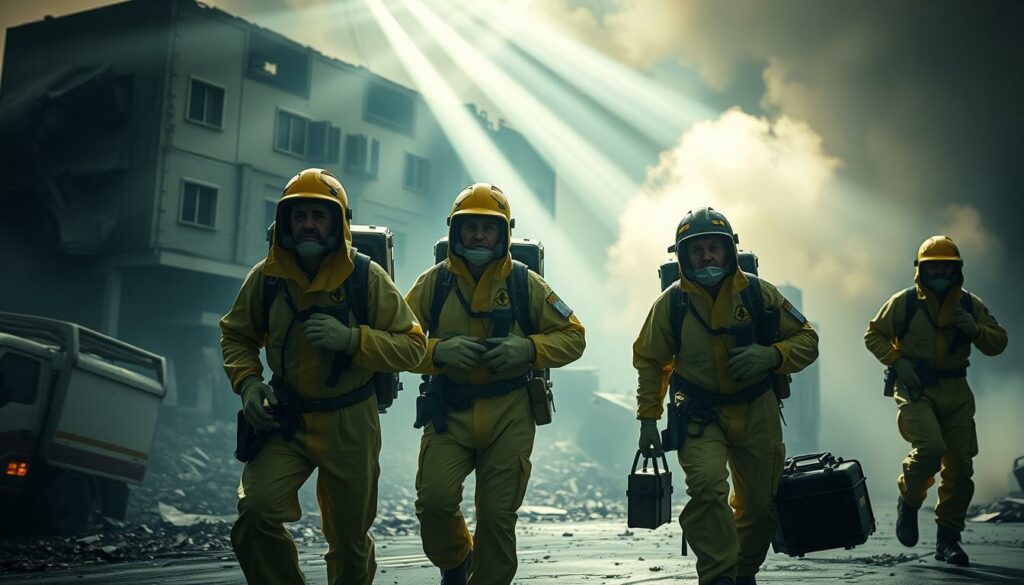
Evacuating quickly is a critical part of handling a radiation emergency. History shows the need for fast and organized evacuations. For example, the Fukushima disaster led to the evacuation of 116,000 people. Here’s how to evacuate safely:
- Follow emergency personnel’s instructions.
- Use official evacuation routes and avoid shortcuts.
- Make sure all family members and pets are evacuated together.
- Bring essential items, like ID and medications.
Taking these steps quickly helps reduce exposure and ensures people get the care they need. Good evacuation plans can greatly lessen health risks and improve emergency responses to radiation.
Personal Safety Equipment for Decontamination
It’s very important to wear the right protective gear when cleaning up hazardous materials. This gear helps keep us safe from harmful substances. Knowing about radiation protective gear, how to use safety equipment, and how to keep it in good shape is key.
Essential Gear for Protection
Here are the must-have items for protecting yourself:
- Respirators: These are needed to filter out harmful particles. They must fit well and be used correctly. For lead or asbestos, a P100 filter is best. Gloves protect your skin from harmful substances.
- Face Protection: Goggles, face shields, or safety glasses keep your face safe from splashes and dust.
- Body Protection: Wearing a Tyvek® suit, disposable gown, and shoe covers keeps your clothes clean.
- Head Protection: Hard hats protect your head from impacts.
- Foot Protection: Safety shoes prevent foot injuries from hazards.
Proper Usage of Protective Equipment
Using safety equipment right is key to staying safe. For example, respirators need to fit well and you must know how to use them. Always wear gloves to avoid touching harmful substances.
It’s also important to throw away gloves after use to stop the spread of contamination. Following OSHA rules helps keep everyone safe in dangerous places.
Maintenance of Equipment
Keeping your gear in good shape is important. Check it often for damage. Clean respirators as the maker says, and throw away disposable suits to avoid spreading contamination.
In short, understanding the importance of protective gear, using it correctly, and keeping it in good condition is vital. Stay safe by following the best practices.
Step-by-Step Decontamination Process
When dealing with radiation exposure, it’s key to follow precise decontamination steps for safety. This guide outlines a step-by-step approach. It starts with checking contamination levels, then moves to using the right cleaning agents for radiation. It also covers the best techniques for cleaning.
Assessing the Contamination Level
First, you need to figure out how bad the contamination is. Use tools like Geiger counters or dosimeters to measure radiation. Look for any visible contamination too. The decision on how to decontaminate depends on several factors.
These include signs of exposure, how close you are to the radioactive source, and what technology shows. A risk-based approach helps decide the best response and decontamination techniques.
Recommended Decontamination Agents
The right cleaning agents for radiation are key to effective decontamination. Different substances work for different types of radioactive materials and surfaces. Here are some top picks:
| Decontamination Agent | Suitable for | Benefits |
|---|---|---|
| Water | General use | Widely available, non-toxic |
| Soap and Water | Skin and hair | Effective for removing surface contaminants |
| Bleach Solution | Hard surfaces | Strong disinfectant properties |
| Specialised Decontamination Foams | Delicate equipment | Non-corrosive, thorough cleaning |
Techniques for Effective Cleaning
Using the right decontamination techniques is essential for removing radioactive contaminants. Here are some effective methods:
- Manual Cleaning: Use cloths or brushes with the right cleaning agents for physical removal.
- Pressurized Water: Low-pressure water can effectively wash away contaminants without spreading them further.
- Isolation and Encapsulation: If surfaces can’t be cleaned, isolate or encapsulate them to stop radiation spread.
- Vacuum Systems: Special vacuum systems can safely remove radioactive particles from hard-to-reach areas.
By following these decontamination steps, you can ensure thorough cleaning. This reduces the risk of health problems from radiation.
Decontamination of Clothing and Personal Items
It’s very important to clean clothes and personal items well after being exposed to radiation. Doing it right helps stop the spread of harmful stuff and keeps you safe.
Safe Removal of Contaminated Clothing
First, take off contaminated clothes carefully. Cut them off instead of pulling them over your head. This helps avoid more exposure. Put the clothes in a strong, double-layered plastic bag.
Don’t shake or touch the items too much. This helps stop radioactive particles from spreading.
Cleaning Household Items
Cleaning your home items well is key to keeping it safe. Use a damp cloth with warm soapy water to wipe surfaces. This works well for hard things like metal, glass, and plastic.
For surfaces that can handle it, use special cleaning agents. This makes sure all harmful stuff is gone.
Radiation experts say cleaning often helps lower the risk of leftover contamination.
Disposal of Contaminated Materials
Getting rid of radioactive stuff needs to follow local rules. Call your local waste management to find out how. Keep contaminated items separate from regular trash.
Use containers that are sealed and labeled. This is important to safely move them to the right places. It helps prevent pollution and keeps the environment safe.
- Check with your local waste management for advice.
- Use strong, labeled containers for contaminated items.
- Follow the right disposal steps to prevent spreading contamination.
Decontamination for Different Types of Contaminants
Dealing with radioactive contaminants is complex. They come in different forms and need specific cleaning methods. It’s important to know the types of contaminants, how they react with water, and how our bodies respond to radiation.
Alpha, Beta, and Gamma Contaminants
Radioactive materials can release alpha, beta, or gamma radiation. Each needs a special cleaning method. Alpha particles are heavy and can be stopped by paper, but are dangerous if swallowed. Beta particles can get through skin but are blocked by plastic or glass. Gamma rays are very strong and need thick materials like lead to block.
Water Soluble vs. Non-Soluble Contaminants
Cleaning water-soluble contaminants is easier than non-soluble ones. Soluble contaminants can be washed away with water. Non-soluble contaminants stick to surfaces and need special cleaners to remove. Knowing if a contaminant is soluble is key to choosing the right cleaning method.
Biological Contaminants and Response
Dealing with biological contaminants requires understanding how our bodies react to radiation. Different contaminants affect us in different ways. Recognizing these effects and getting medical help quickly is important for recovery.
- Identify the type of radioactive contaminant.
- Determine if the contaminant is soluble or non-soluble.
- Apply appropriate decontamination agents.
- Monitor biological response to radiation and seek medical help if needed.
By focusing on these steps, we can ensure effective decontamination. This keeps people and the environment safe.
Environmental Considerations in Decontamination
Decontaminating areas hit by radiation is key to reducing harm. It affects communities and ecosystems. Knowing the environmental impact of radiation is the first step in tackling this complex task. Here, we cover the main points and steps to keep our environment safe and strong.
Impact on Surrounding Areas
The environmental impact of radiation goes beyond the contaminated site. It harms soil, water, and wildlife. Contaminants can move through different mediums, messing up ecosystems and possibly reaching humans. It’s vital to watch closely and act fast to stop the spread and protect the environment.
Decontaminating the Outdoors
Outdoor decontamination needs special methods based on the area and contamination level. Techniques like high-pressure washing, removing topsoil, and using chemicals carefully can clean outdoor spaces. Having clear, documented steps is key to successfully cleaning up outdoor areas.
| Technique | Application Method | Effectiveness |
|---|---|---|
| High-Pressure Washing | Water jets | High |
| Topsoil Removal | Soil excavation | Moderate |
| Chemical Agents | Spraying | Varies |
Long-Term Environmental Safety Measures
Keeping the environment safe long-term after decontamination means constant checks and tests. Setting up strong safety rules, like testing air and water, and keeping plants that soak up pollutants is important. Safety also means teaching communities how to avoid exposure and preparing for emergencies.
Psychological Aspects of Radiation Exposure
Being exposed to radiation in nuclear disasters can cause strong emotional reactions. It’s key to manage anxiety about radiation to keep our minds healthy. People who went through Chernobyl and Fukushima have shown higher rates of PTSD, depression, and anxiety.
Training in mindfulness and cognitive reappraisal can help improve mental strength. These methods show small but helpful benefits.
Coping with Fear and Anxiety
Many people feel scared and anxious after radiation exposure. It’s important to accept these feelings and find ways to deal with them. Mindfulness training can help stay calm during stressful times.
Changing negative thoughts into positive ones also helps reduce anxiety and depression. This is called cognitive reappraisal.
Community Support Systems
Having a strong support system is vital for mental health. People with good support systems tend to face less severe mental health issues. Building community and support groups is key for emotional support.
Technology, like mobile apps, can also help keep people connected and support their mental health.

Mental Health Resources
It’s essential to have access to mental health services after radiation exposure. Governments and organizations should provide counseling, hotlines, and online resources. Mental health professionals who specialize in trauma can be a big help.
Targeted therapies can greatly improve mental health and strengthen support systems. This is important for recovery.
| Intervention Type | Benefits | Examples |
|---|---|---|
| Mindfulness Training | Reduces stress and anxiety | Meditation, Deep Breathing Exercises |
| Cognitive Reappraisal | Reframes negative thoughts | Cognitive Behavioral Therapy (CBT) |
| Community Support | Enhances resilience | Support Groups, Community Events |
| Technology-Based Supports | Provides accessible care | Mental Health Apps, Online Counseling |
It’s important to understand and tackle the mental health effects of radiation exposure. Making sure people have access to mental health resources and building strong community support systems is key. This helps create resilient communities that can handle the challenges of radiation emergencies.
Regulatory Guidelines and Standards
Following safety rules to avoid radiation exposure is complex. These rules come from government and international groups. They aim to keep people and the environment safe. By following these rules, we can reduce risks from radiation.
Overview of Government Regulations
In the U.S., agencies like the EPA, NRC, and FDA watch over radiation safety. They make strict rules to protect health and the environment. For example, the NRC oversees nuclear power plants and medical uses of nuclear materials.
Key Organizations Involved
Many groups help with radiation safety rules. The IAEA sets global standards for radiation protection. In the U.S., OSHA sets rules for radiation in workplaces. These groups work together to manage radiation risks well.
Resources for Compliance
There are many tools to help follow these rules. The NRC offers guidelines and training to help organizations. The IAEA also has lots of resources like safety standards and training materials. Using these resources helps keep operations safe and protects people’s health.
| Organization | Role | Compliance Resources |
|---|---|---|
| Environmental Protection Agency (EPA) | Sets environmental standards and regulations for radiation safety. | Guidelines, educational materials, public health information. |
| Nuclear Regulatory Commission (NRC) | Regulates commercial nuclear power plants and use of nuclear materials. | Training programs, compliance checklists, safety guidelines. |
| International Atomic Energy Agency (IAEA) | Provides a global framework for radiation protection and nuclear safety. | Safety standards, technical documents, training materials. |
| Occupational Safety and Health Administration (OSHA) | Establishes workplace standards for radiation safety. | Regulatory guidelines, safety procedures, worker training. |
Continuous Education and Training
Keeping up with the latest in radiation safety is key to effective decontamination and protection. Training must be ongoing, focusing on updating safety practices and improving skills. This not only boosts competence but also builds confidence in handling radiation exposure.
Importance of Regular Training
Regular training keeps skills sharp in the latest decontamination and safety methods. With technology advancing fast, staying current is vital. It also makes environments safer for everyone.
Current Training Programs Available
Many training options exist today, from in-person workshops to online courses. Face-to-face training often works better due to direct interaction. Yet, online training is flexible and accessible, perfect for those with busy schedules.
Programs like those from the Radiation Emergency Assistance Center/Training Site (REAC/TS) and the Centers for Disease Control and Prevention (CDC) are notable. They help keep professionals and families informed.
Staying Updated on Best Practices
It’s critical to stay current with radiation safety and decontamination best practices. Regularly checking updates from the Nuclear Regulatory Commission (NRC) and Environmental Protection Agency (EPA) is helpful. Reading peer-reviewed journals and attending seminars also enhance knowledge.
By dedicating to ongoing education, one can protect themselves and their community from radiation threats.
FAQ
What is Radiation?
Radiation is energy released as waves or particles. It comes from natural sources like the sun and man-made ones like x-ray machines.
What are the types of Radiation Exposure?
There are two types of radiation exposure. External exposure happens when radioactive material is outside the body. Internal exposure occurs when it’s ingested or inhaled.
What are the short-term effects on health?
Short-term effects include skin burns, sickness, and hair loss. These depend on how much radiation you’re exposed to.
Why does decontamination matter?
Decontamination removes radioactive materials from skin, clothes, and surfaces. It reduces the risk of more exposure and stops contamination from spreading.
What are the key goals of decontamination?
The main goals are to remove radioactive particles and reduce exposure. It also prevents contamination from spreading and keeps people safe.
What are common misconceptions about decontamination?
Some think decontamination is only for high-dose exposure. They also believe it’s complicated and needs special chemicals. But, simple steps can be very effective.
How to recognize exposure symptoms?
Look out for skin redness, blisters, and sickness. If you notice these after possible exposure, get medical help right away.
What immediate actions should one take?
First, remove contaminated clothes. Then, wash exposed skin with soap and water. Move to a clean area away from radiation.
How to evacuate the affected area?
Follow evacuation routes as instructed by emergency services. Move quickly but calmly to safe areas. Cover your nose and mouth to avoid inhaling radioactive particles.
What essential gear is needed for protection?
You’ll need gloves, masks, eye protection, and full-body suits. These protect against radioactive contamination.
How to properly use protective equipment?
Always follow the manufacturer’s instructions. Make sure the gear fits right and is in good condition. Replace damaged gear immediately.
How to maintain decontamination equipment?
Check for wear and tear regularly. Clean as directed and store in a clean, dry place. Replace equipment as needed to keep it effective.
How to assess the contamination level?
Use radiation detection instruments to measure levels. Visual checks and contamination surveys also help assess contamination.
What are the recommended decontamination agents?
Use mild soap, water, and chemicals like calcium or zinc solutions. They can help remove contaminants.
What techniques ensure effective cleaning?
Gently scrub skin and surfaces. Use blotting to avoid spreading contaminants. You may need to wash multiple times for thorough decontamination.
How to safely remove contaminated clothing?
Cut off contaminated clothes without pulling them over your head. Put them in a sealed plastic bag and label it as contaminated waste.
How to clean household items?
Clean non-porous surfaces with soap and water. Use vacuum cleaners with HEPA filters for carpets. Always wear protective gear and dispose of waste properly.
How to dispose of contaminated materials?
Put contaminated materials in sealed plastic bags. Label them clearly and follow local hazardous waste disposal rules.
How to handle alpha, beta, and gamma contaminants?
Alpha particles can be blocked by skin but are risky if inhaled or ingested. Beta particles can penetrate skin but not deeply. Gamma rays are highly penetrating and need heavy shielding.
What are water-soluble vs. non-soluble contaminants?
Water-soluble contaminants can be washed away with water. Non-soluble contaminants need special cleaning agents and techniques for removal.
How to respond to biological contaminants?
Biological contaminants may need extra precautions like sterilization and disinfectants. Always follow health authority guidelines.
What is the impact on surrounding areas?
Radiation can contaminate soil, water, and air. It affects plants, animals, and ecosystems. Decontamination efforts are needed to restore safety.
How to decontaminate the outdoors?
Remove topsoil, wash down surfaces, and use barriers to contain contamination. Working with environmental specialists is often necessary.
What are long-term environmental safety measures?
Long-term measures include monitoring radiation levels, cleaning contaminated sites, and preventing future exposure.
How to cope with fear and anxiety?
Use stress-relief techniques, seek support from loved ones, and keep routines. Professional counseling can also help.
What are community support systems?
Community support includes local health departments, emergency services, and non-profit disaster relief and mental health groups.
What mental health resources are available?
Mental health resources include hotlines, online therapy, support groups, and counseling from trained professionals.
What are the government regulations related to radiation safety?
Regulations vary by country. They often include guidelines from agencies like the Environmental Protection Agency (EPA) and the Nuclear Regulatory Commission (NRC).
What key organizations are involved in radiation safety?
Key organizations include the World Health Organization (WHO), the International Atomic Energy Agency (IAEA), and the Centers for Disease Control and Prevention (CDC).
Where to find resources for compliance?
Find resources on regulatory bodies’ websites, educational institutions, and professional organizations dedicated to radiation safety.
Why is regular training important?
Regular training keeps you updated on best practices and compliance. It also ensures you know how to respond to radiation emergencies effectively.
What current training programs are available?
Training programs are offered by universities, government agencies, and specialized institutions. They provide both online and in-person courses.
How to stay updated on best practices?
Subscribe to industry newsletters, attend conferences, and join professional organizations. This way, you get regular updates and networking opportunities.
Source Links
- https://pmc.ncbi.nlm.nih.gov/articles/PMC11222772/
- https://www.orau.gov/rsb/pfaird/downloads/Psychological_First_Aid_in_Radiation_Disasters_Training.pdf
- https://pmc.ncbi.nlm.nih.gov/articles/PMC9400060/
- https://iopscience.iop.org/article/10.1088/1361-6498/ac7d19/pdf
- https://www.frontiersin.org/journals/public-health/articles/10.3389/fpubh.2019.00141/pdf
- https://www.fema.gov/cbrn-tools/key-planning-factors-chemical-incident/kpf5/1/1-5
- https://pmc.ncbi.nlm.nih.gov/articles/PMC8389263/
- https://remm.hhs.gov/psych.htm
- https://www.dhs.wisconsin.gov/environmental/ppe.htm
- https://asprtracie.hhs.gov/technical-resources/72/responder-safety-and-health
- https://pmc.ncbi.nlm.nih.gov/articles/PMC5061579/
- https://www.dhs.gov/sites/default/files/publications/Patient Decon National Planning Guidance_Final_December 2014.pdf
- https://pmc.ncbi.nlm.nih.gov/articles/PMC9353000/
- https://cectresourcelibrary.info/wp-content/uploads/2021/07/Minimizing-distress-promoting-resilience.pdf
- https://theredguidetorecovery.com/restoring-smoke-damaged-textiles-what-does-clean-mean-2/?srsltid=AfmBOorDb7bz4XWsGagef1xPFpgOI1ztNBcUXCVpiuLrPl_XyIkEkriR
- https://journals.plos.org/plosone/article?id=10.1371/journal.pone.0089846
- https://pmc.ncbi.nlm.nih.gov/articles/PMC5898741/
- https://www.cambridge.org/core/books/major-incidents-pandemics-and-mental-health/social-psychology-of-mass-casualty-decontamination-in-chemical-biological-radiological-or-nuclear-cbrn-incidents/93C18B61E7BC709C1E8E6029F804C670
- https://pmc.ncbi.nlm.nih.gov/articles/PMC8848757/
- https://pmc.ncbi.nlm.nih.gov/articles/PMC8656636/
- https://nvlpubs.nist.gov/nistpubs/TechnicalNotes/NIST.TN.1882.pdf
- https://pubmed.ncbi.nlm.nih.gov/34436103/
- https://www.mdpi.com/2076-328X/11/8/113
- https://www.frontiersin.org/journals/psychiatry/articles/10.3389/fpsyt.2020.608588/full
- https://www.nature.com/articles/s44184-022-00005-8
- https://www.tc.columbia.edu/faculty/gab38/faculty-profile/files/2023_Bonanno-et-al._NATURE-REVIEWS-PSYCHOLOGY.pdf
- https://pmc.ncbi.nlm.nih.gov/articles/PMC6464102/
- https://solportal.ibe-unesco.org/articles/resilience-for-lifelong-learning-and-well-being/
- https://pmc.ncbi.nlm.nih.gov/articles/PMC10617376/
